Chess Openings is live: learn a line, then practise the replies
You learn an opening, remember the first few moves, and feel reasonably pleased with yourself. Then your opponent chooses a different reply and the familiar route disappears. Learning a sequence is useful; recognising what is happening when that sequence changes takes a little more practice.
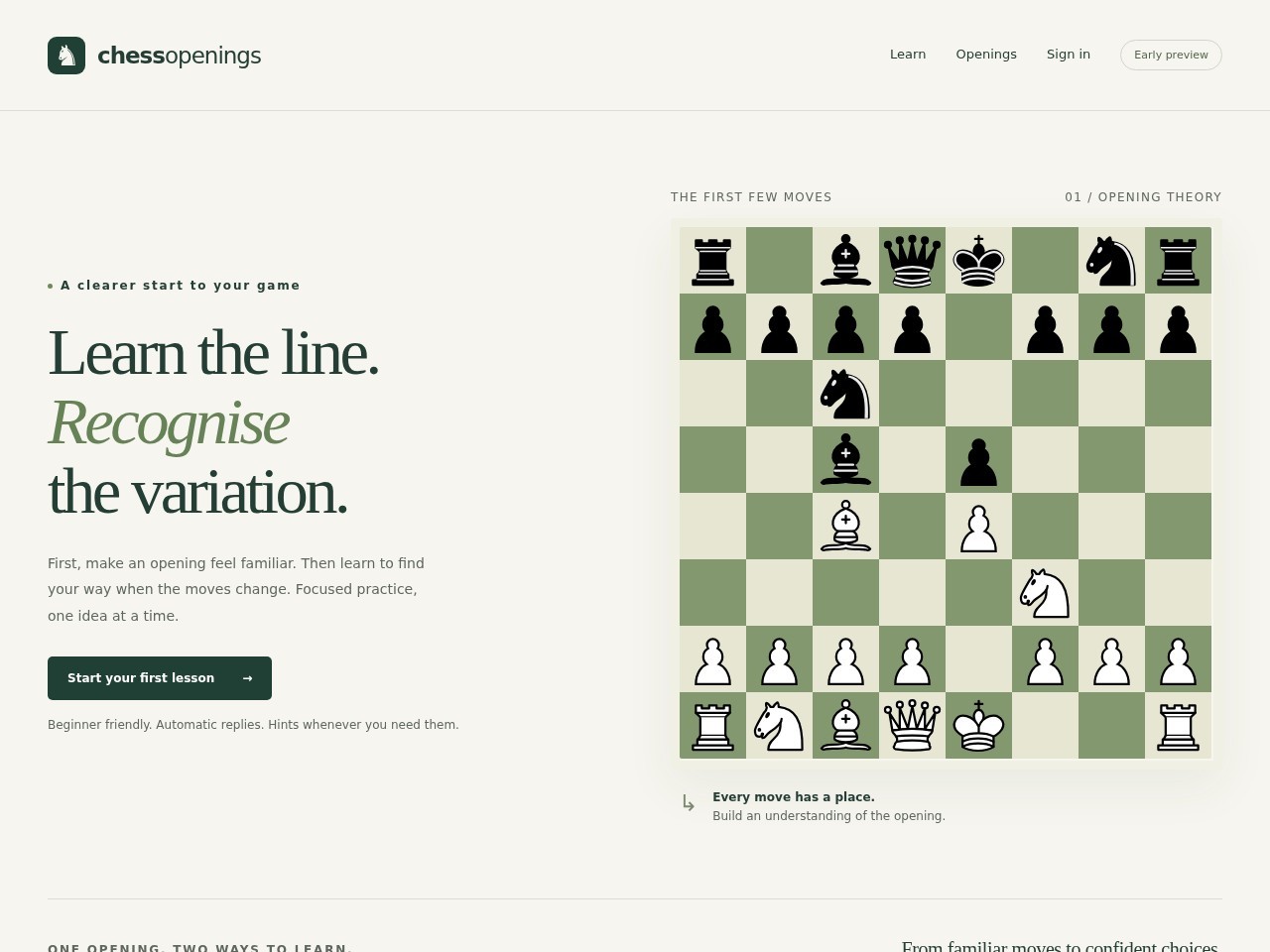
That is the idea behind my new project, Chess Openings. It is a browser-based opening trainer built around two connected activities: follow a line until it starts to feel familiar, then practise responding to different taught variations. The site is online now as an early preview, and you can have a look around.
Start with one opening and a board
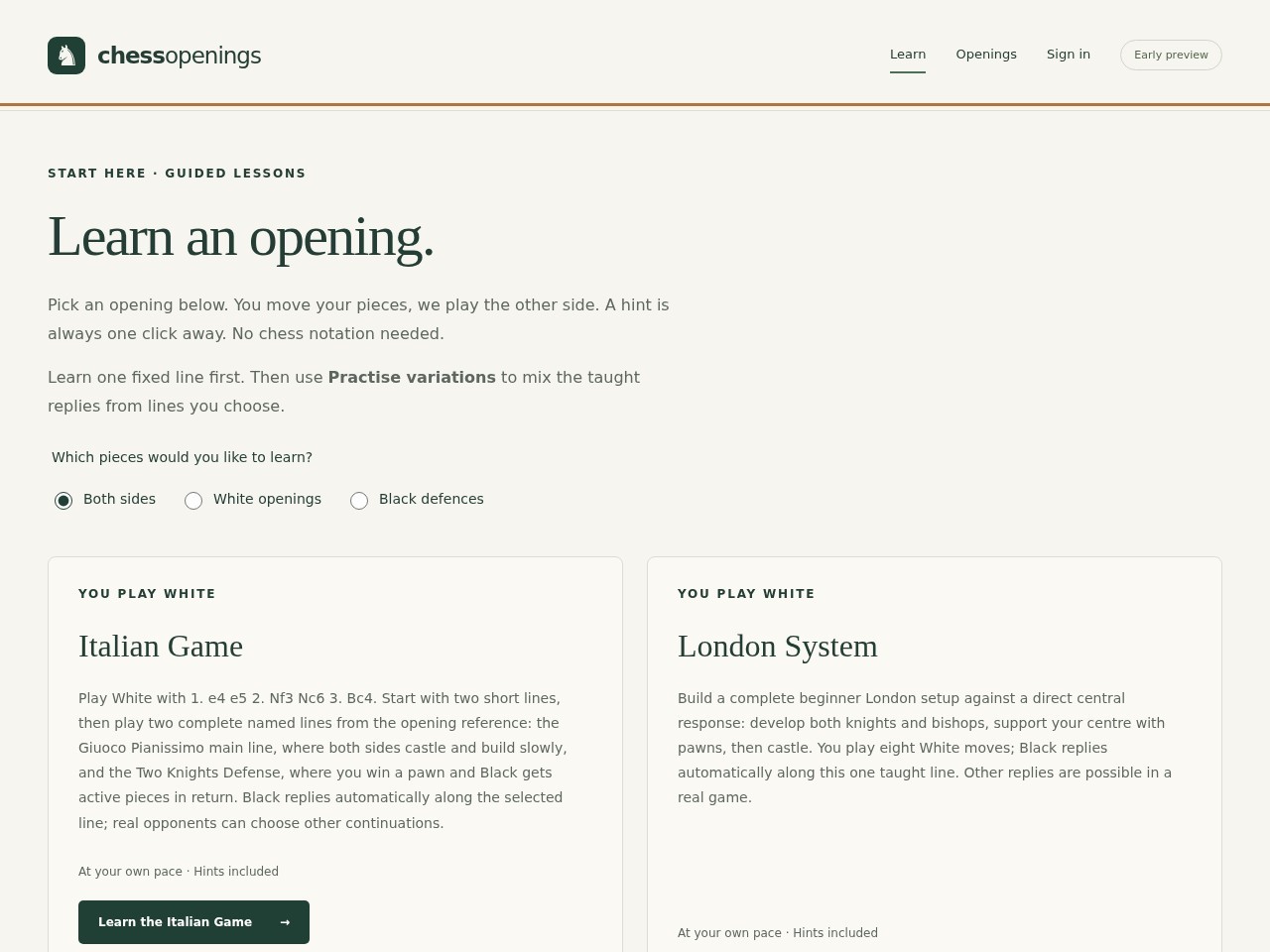
The Learn page gives you a choice of ten opening courses. For White, there is the Italian Game, London System, Queen’s Gambit, Ruy Lopez and Catalan. For Black, you can work on the Caro-Kann, French, Sicilian, King’s Indian or Slav defences. You can filter by side, so you do not have to sort through everything when you already know what you want to practise.
In a guided lesson, you move your own pieces and the app replies for the other side. Hints and explanations are available when you need them, and you can use the board without already being comfortable reading chess notation. If you are looking for somewhere to begin, the London course takes you through a setup all the way to castling, while the Italian gives you several continuations to get to know.
A guided line has a particular route through the opening. If you play another legal move, the app explains that you have left that exercise and lets you try again. It does not pretend that every move outside the lesson is bad chess. That distinction matters: you are learning a chosen continuation, rather than asking an engine to judge an entire game.
Let the replies change
Once a line feels comfortable, Practise variations lets you select several taught lines from the same opening and mix them together. The opponent can take different supported branches, so you have to look at the position and find your response rather than simply repeat the same sequence.
You choose the scope of the practice. With one line selected, the exercise stays on that fixed route; adding more lines introduces more choices. You can also hide the variation names until you want to reveal them. The replies come from the lines included in the exercise, which keeps the practice focused on the opening you came to learn.
Have another go tomorrow
Lessons and training use a verified account so your practice can be saved and picked up again on another device. The Your practice & reviews page brings together the lines you have worked on, suggested reviews and moves worth revisiting. Practice with White and Black is tracked separately.
Using a hint is part of learning. The app keeps assisted practice distinct from remembering a line on your first try, then suggests when to return to it. Successful reviews gradually spread further apart; a line that needed help comes back sooner. You can still practise whenever you feel like it, without waiting for a review to become due.
Look up the opening that caught your eye
Alongside the courses, the opening reference lets you search thousands of named variations and replay their recorded moves on a board. There are shortcuts for familiar opening families, as well as name search and an optional ECO filter if you already know the classification you are looking for.
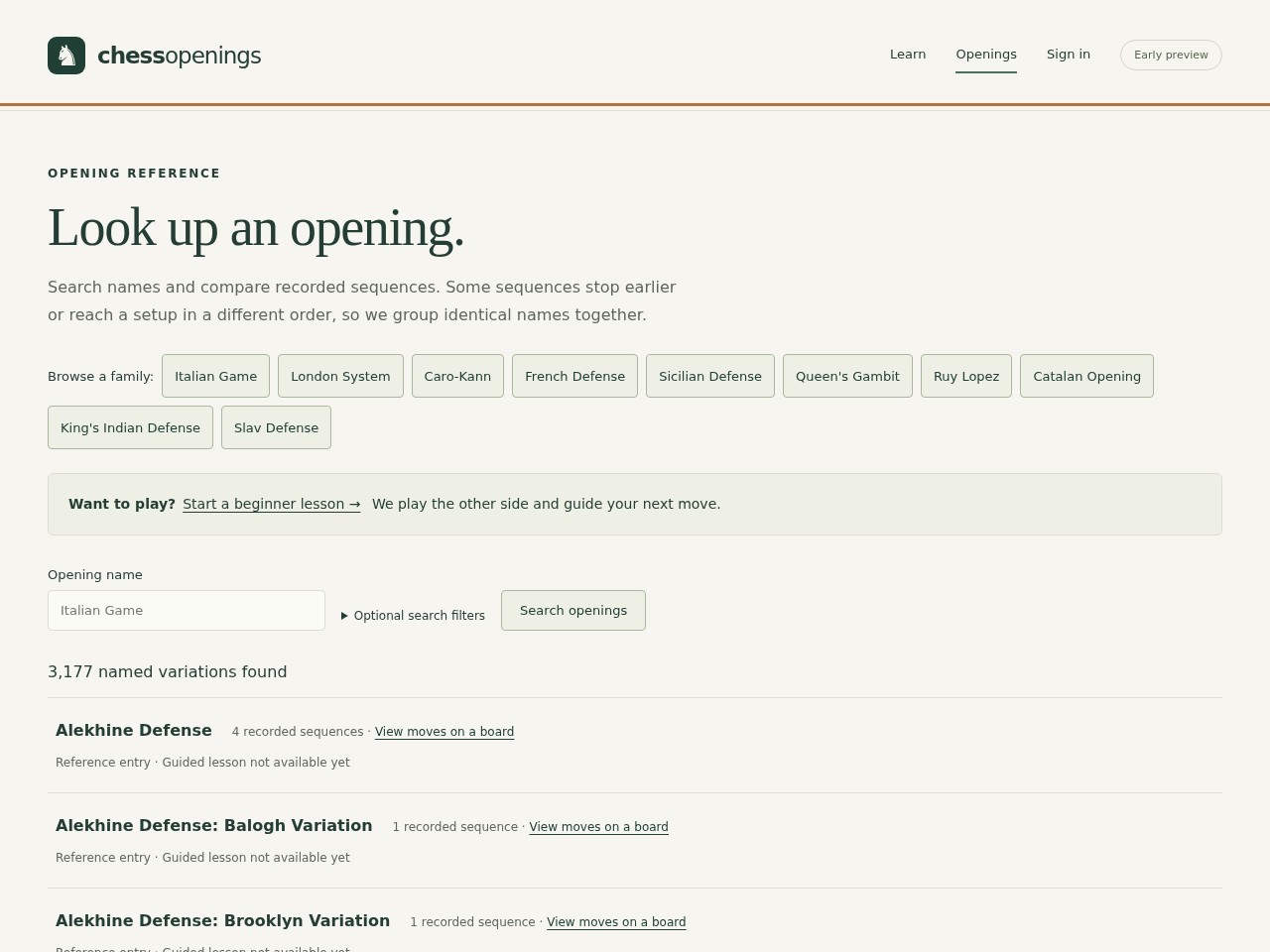
The reference uses the Lichess opening-name dataset. It is broader than the course selection: finding a named position there does not mean it already has a guided lesson. I have kept the playable courses separate so it is clear where you can start practising and where you are browsing recorded opening sequences.
Come try a line
There is nothing to install. Open Chess Openings, browse the courses, then create and verify an account when you are ready to train. Pick one opening you actually want to use, follow a line, and see what you remember when you come back to it.
This is still an early version, and I would like to hear where the learning experience feels helpful or confusing. If an explanation leaves you wondering why a move was played, that is useful feedback. The project is also open source on GitHub for anyone curious about how it is being built.