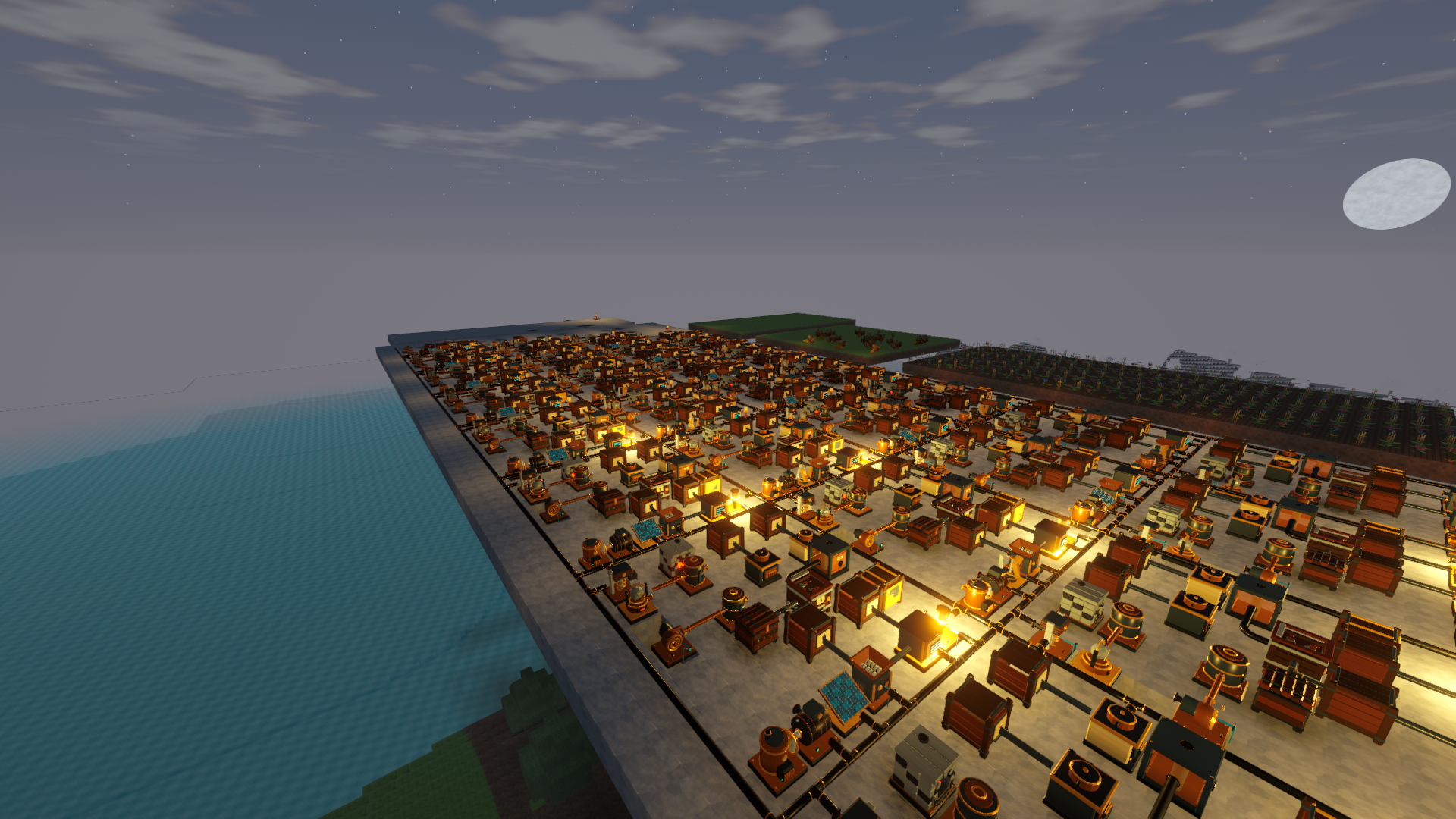
Rivet Reach: solar power, wind turbines and a factory put to the test
Rivet Reach’s workshop now has two more ways to keep the lights on: solar panels and wind turbines. They feed the existing electrical grid, charge batteries and respond to the same weather you see outside. A clear afternoon, a rainy evening and a storm now mean different things for your power supply.
The previous update covered fishing, chickens, beds, crates and item routing. The overnight work brings more of those systems together, with a much larger factory test and a new set of in-game screenshots.
This is a development update for alpha 0.1.0. As of 20 September 2026, the public Windows download is still alpha 0.0.1. The features below are in development builds, and the release review still has performance work outstanding.
A workshop big enough to expose the problems
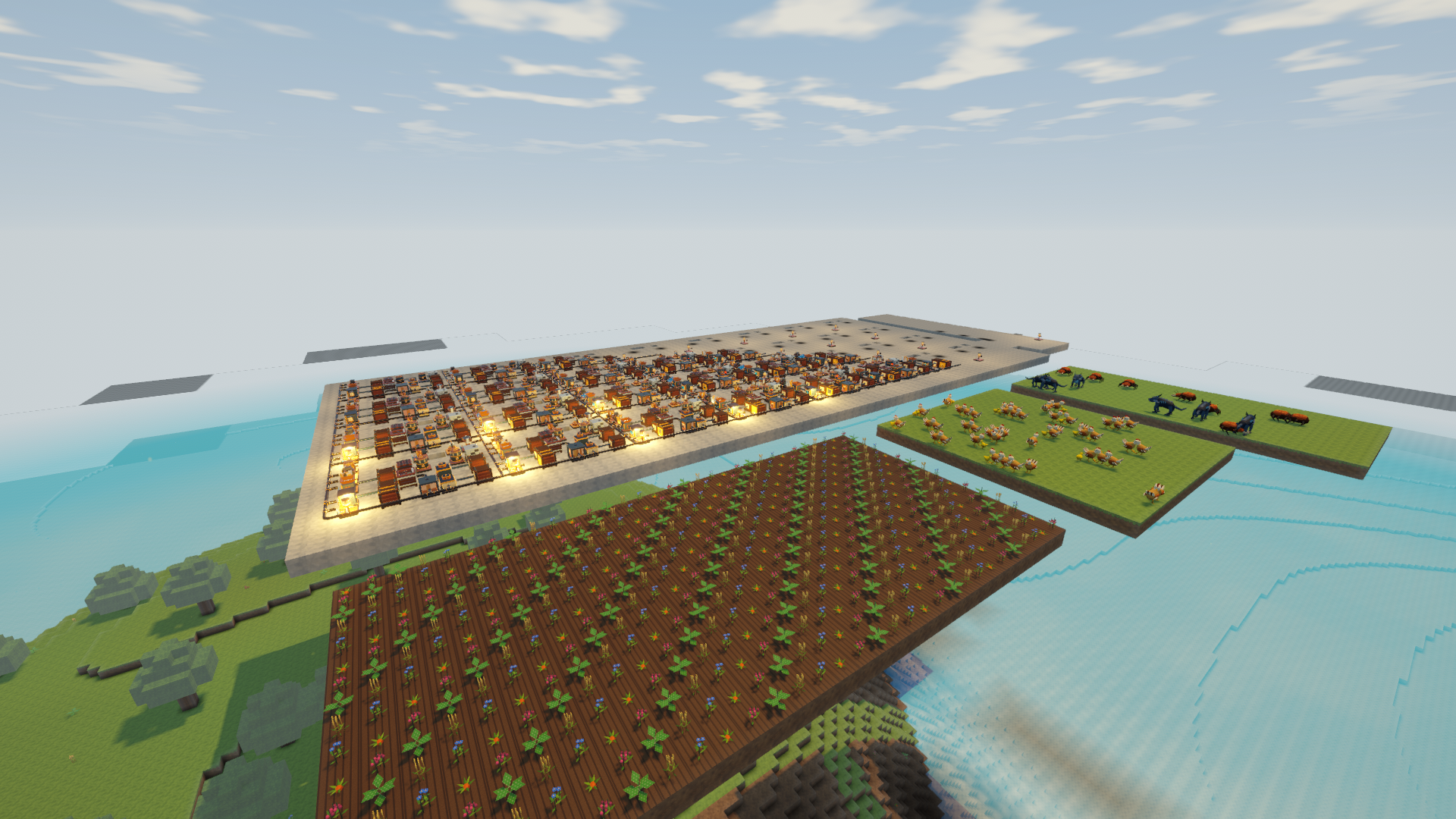
The new gallery shows 32 production lines combining boilers, alternators, solar panels, turbines and batteries. Crushers and electric furnaces process iron into bulk storage. Alongside them sit a 512-cell crop plot, 64 persistent chickens and 14 deliberately placed hostile creatures.
It is a deliberately assembled test world with supplied materials and controlled creature populations. The machinery, crops, weather and animals use the real game systems. Putting them together makes it possible to check what happens when production is busy, storage fills up, power runs short or the player walks away.
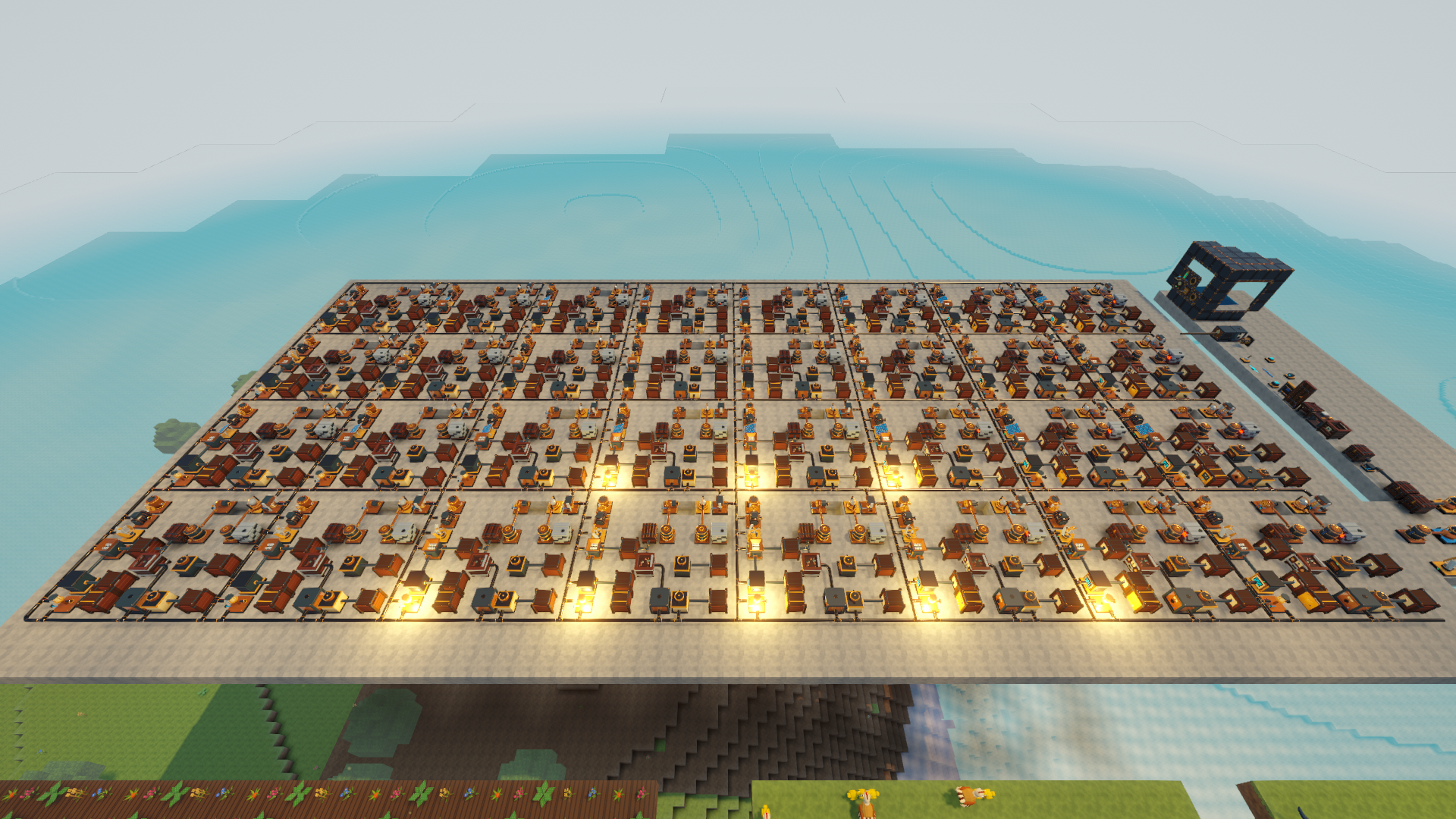
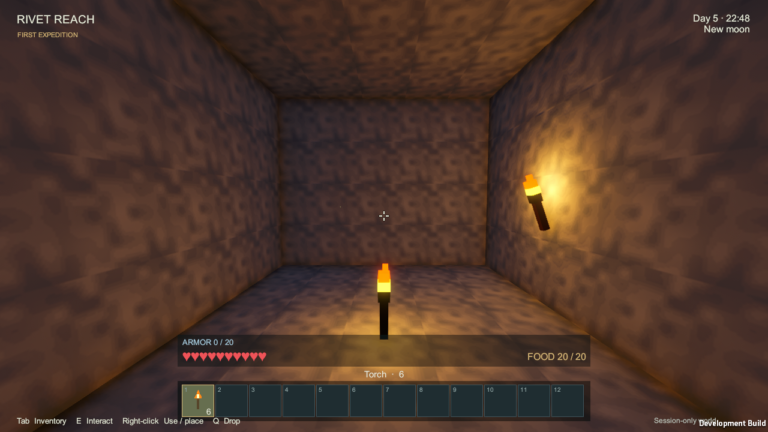
The screenshots are direct captures from the Windows review build at 1920 × 1080. You can open each image at full resolution, or browse all four in the release-review gallery.
Solar and wind give the weather a job
Both generators are crafted at the Machinist’s Bench and connect to ordinary Power Cable. They need air directly above them and a clear path past solid roofs or terrain to the sky. A panel in a sealed workshop will not help much; plan some outdoor space for generation and run the cable back inside.
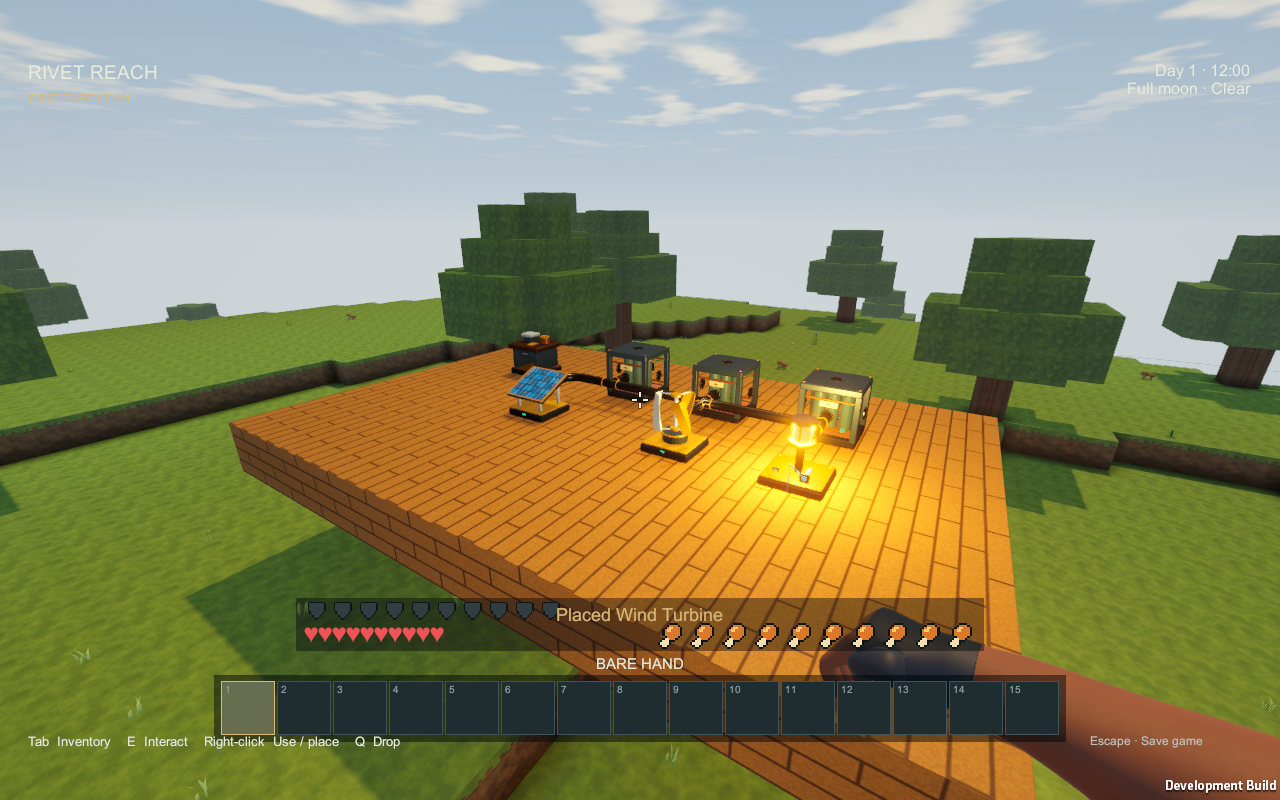
Solar output rises from zero at 06:00, peaks at noon and drops back to zero at 18:00. Wind keeps working at night, with gusts that change gradually. These are the current tuning values:
| Weather | Solar at noon | Wind, day or night |
|---|---|---|
| Clear | 400 W | 40–140 W |
| Rain | 200 W | 240–360 W |
| Storm | 60 W | 400 W |
That gives the two generators a useful balance: a storm cuts solar output but brings the turbine up to 400 W. The boiler-and-alternator setup still provides a stronger, steady 800 W while it has fuel and water. Renewables add options to a workshop that already has steam power.
There are no height bonuses or turbine-spacing penalties to work around. The renewable-power guide has both crafting recipes, placement rules and screenshots of the controls.
Use the power first, store what is left
Generators on the same connected cable grid contribute to one supply. Machines take what they need first, then spare generation is shared between batteries and formed battery banks that still have room. When generation falls short, stored energy covers the machine deficit.
Batteries do not charge one another, even if the cables form a loop. And if the machines are idle and the batteries are full, spare generation is discarded. The controls separate Available power from Delivered power; a turbine stops turning when nothing is using its output.
Sleeping skips time without filling the batteries for the hours skipped. Closing the game also produces no electricity. That makes storage something to plan around, rather than a reward for leaving the game shut.
Rain outside, a dry workshop inside
The world moves between clear skies, rain and storms, with clouds and rainfall changing over roughly 15 seconds. Storms can arrive in daylight or at night. The sound and darker sky make the change noticeable even before you check a generator.
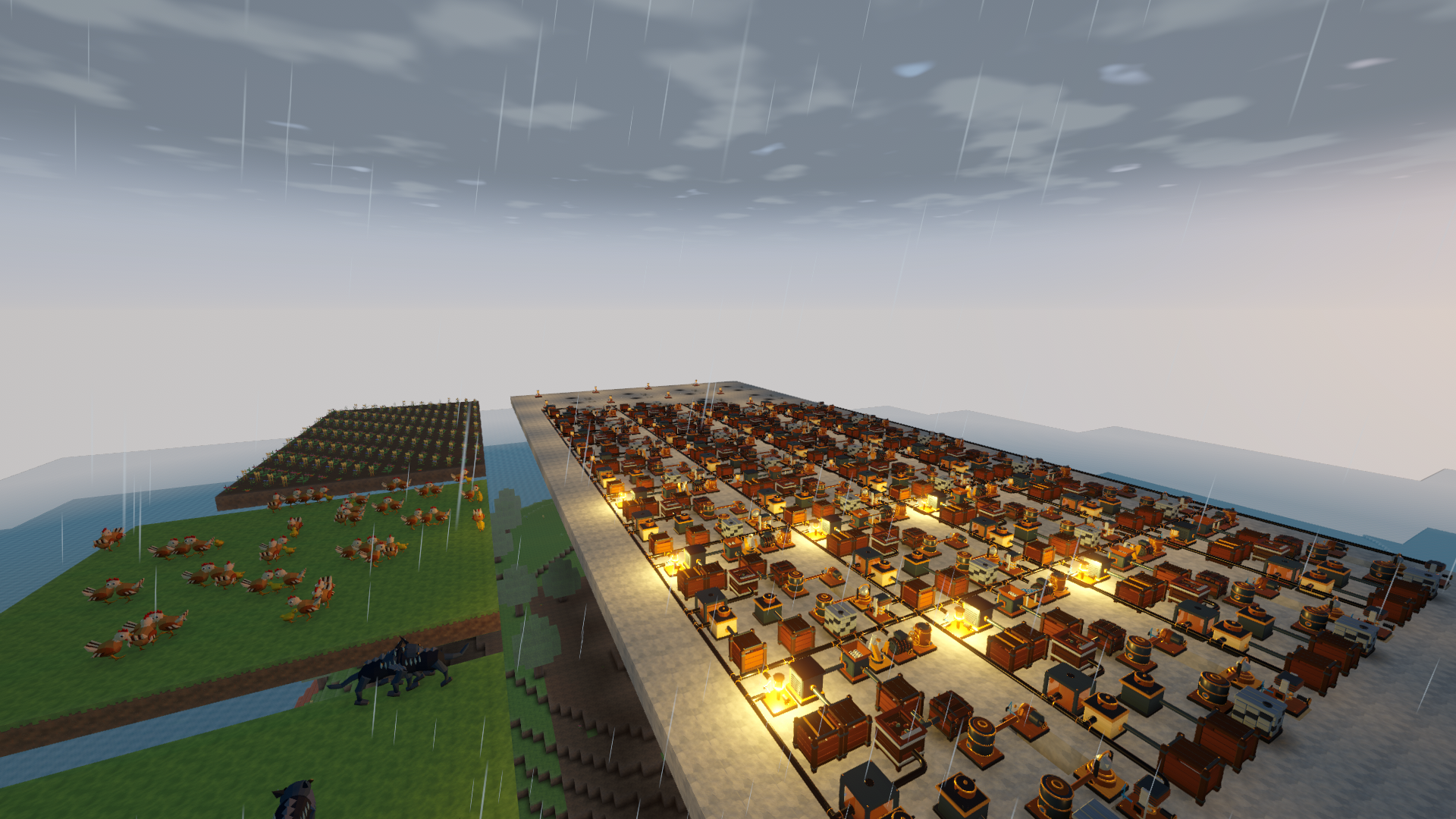
A solid roof keeps rain out and softens the weather sounds; caves provide shelter too. Storm flashes and thunder are atmospheric. They do not burn down buildings, strike the player or destroy crops, and rain does not add watering chores or fill tanks.
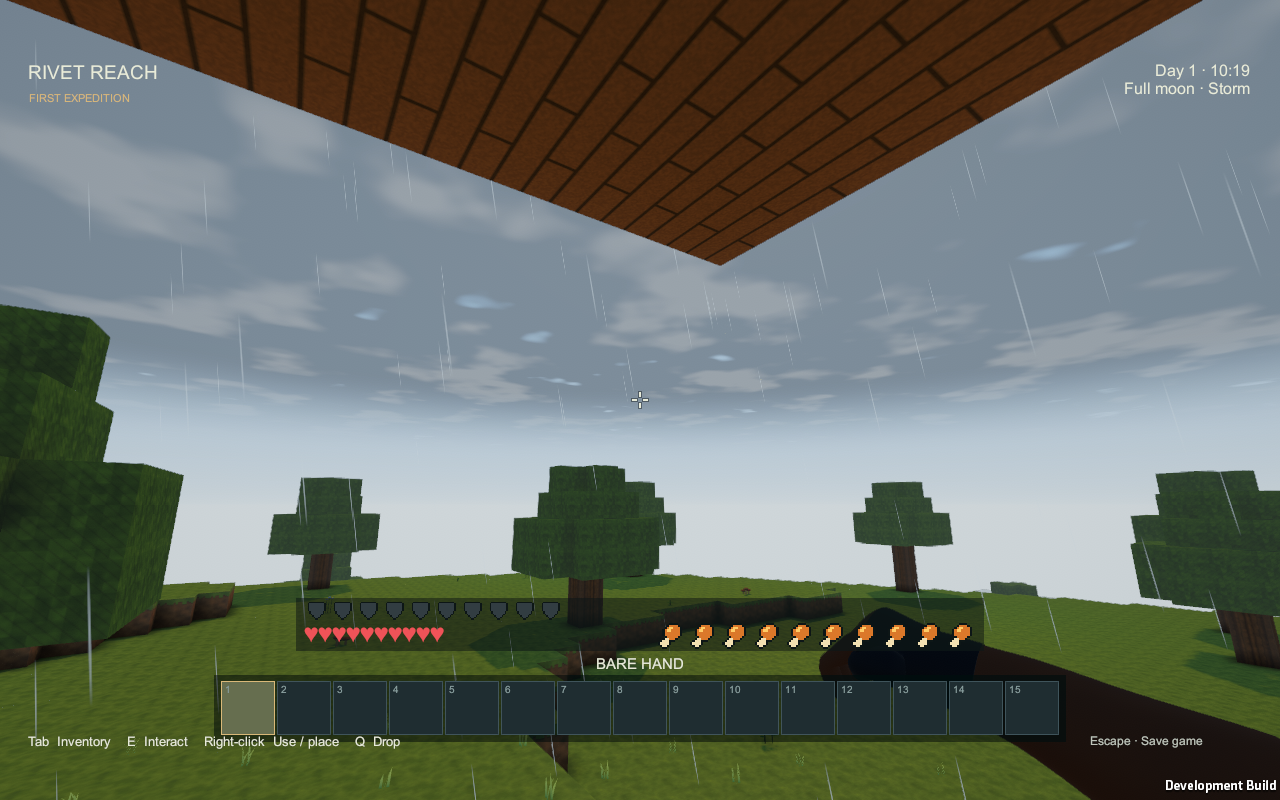
Saving remembers the weather and any transition already under way. Loading resumes it without advancing the schedule for time spent away. The weather guide explains shelter, pausing and what happens after sleeping.
A factory needs to stay loaded
Walking far enough away can unload an unprotected workshop. Its stored materials and partial work are preserved, but production stops. Returning does not award a backlog of items or electricity.
If a remote installation should keep working while you explore, cover the required chunks with Chunk Loaders. The review includes a separate remote circuit with explicit loader coverage to check this behaviour.
What still needs work before alpha 0.1.0
The combined factory passes its scripted correctness checks, including production, transfers, storage and unloading. Performance is not yet where it needs to be. The latest review still misses the target of above 60 FPS in normal play and a 45 FPS minimum, particularly with larger factories and terrain streaming.
Those measurements come from an i7-10750H and RTX 2060 system at 1080p. They are a record of that test setup, not a frame-rate promise for other machines. The full release review includes the timings, fixes and remaining stalls.
For now, the Rivet Reach project page is the place to find the current download and starting guide. Alpha 0.1.0 remains the next planned release; these new systems are part of getting it ready.