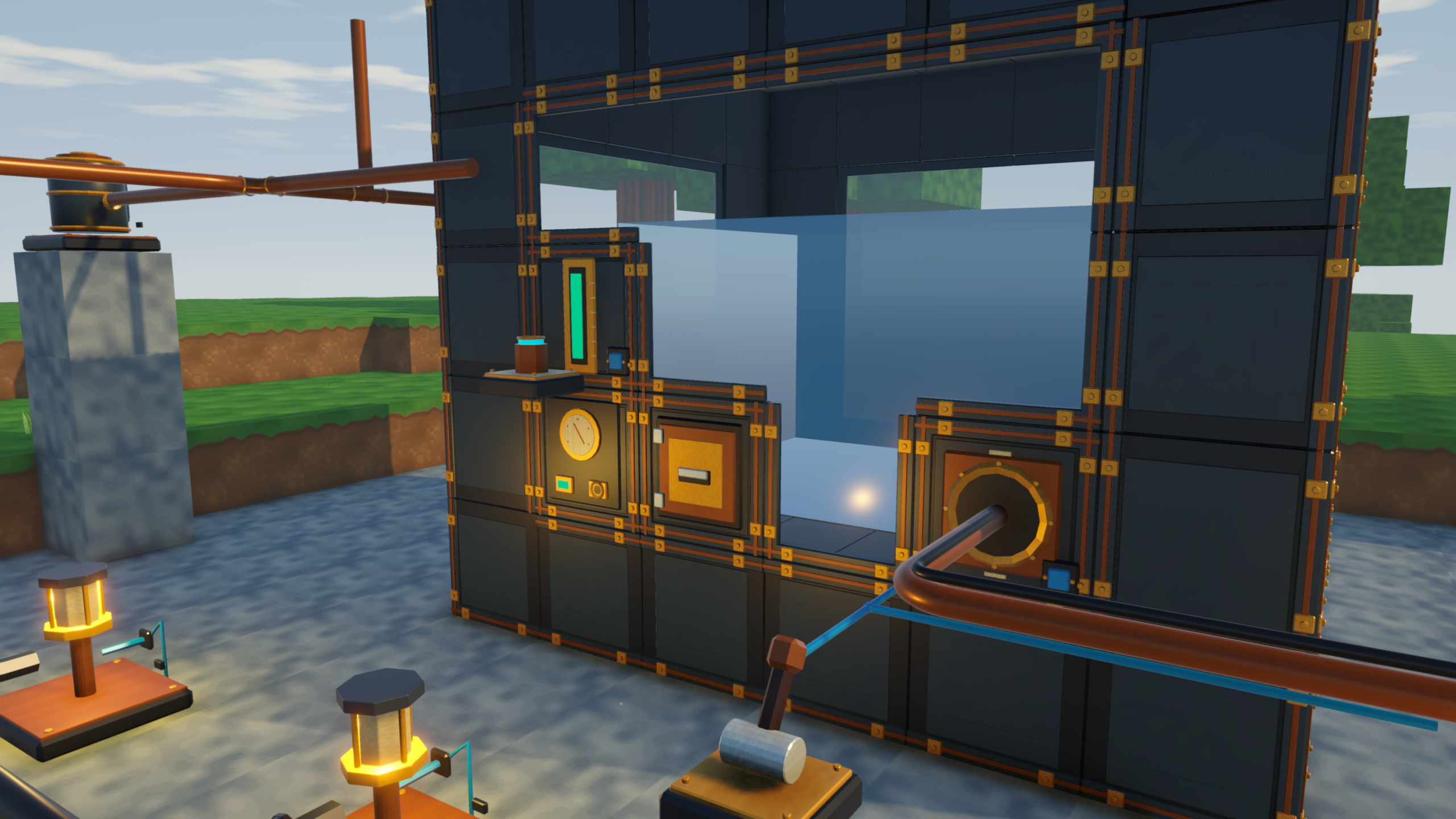
What’s coming in Rivet Reach alpha 0.0.2: farming, fishing and chickens
Update — 19 September 2026: The next release is now planned as alpha 0.1.0, skipping the proposed 0.0.2. Fishing, chickens, beds, crates, item-routing priorities and weather have since been implemented on the development branch. Read the current development update. The original preview below records the earlier plan and includes captures from later review builds; the public 0.0.1 download still has no persistent saves.
Rivet Reach alpha 0.0.2 is taking shape. The remaining work is tracked in issue #10, which brings together farming, food, animals and other features needed for the early survival game. The release is waiting for that work to be finished.
The earlier alpha 0.0.2 post covered saves, crafting controls, the survival display and the Azure ore update. This time, I’m looking at what those changes mean when you’re playing, starting with the creatures and machinery already available.
What you can already explore
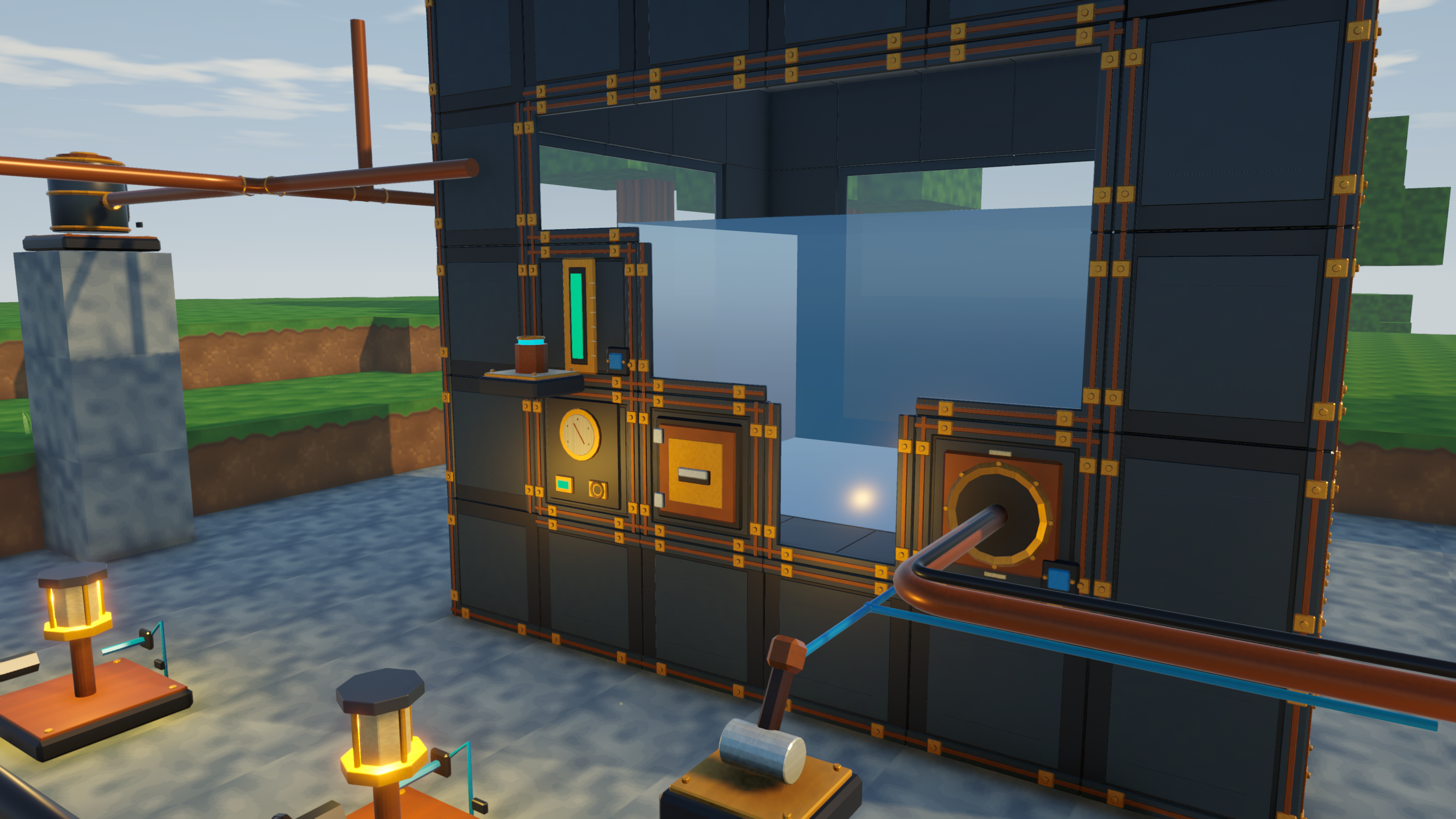
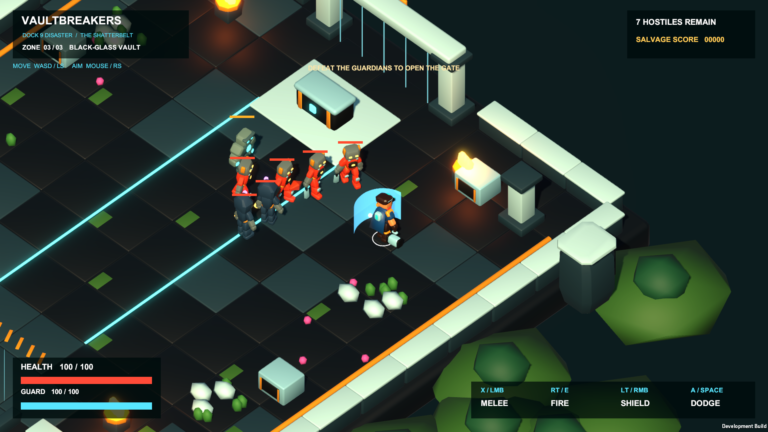
The current alpha has three native creatures to encounter, as well as machinery for building a working workshop. Each creature appears in a different part of the world or at a different time of day.
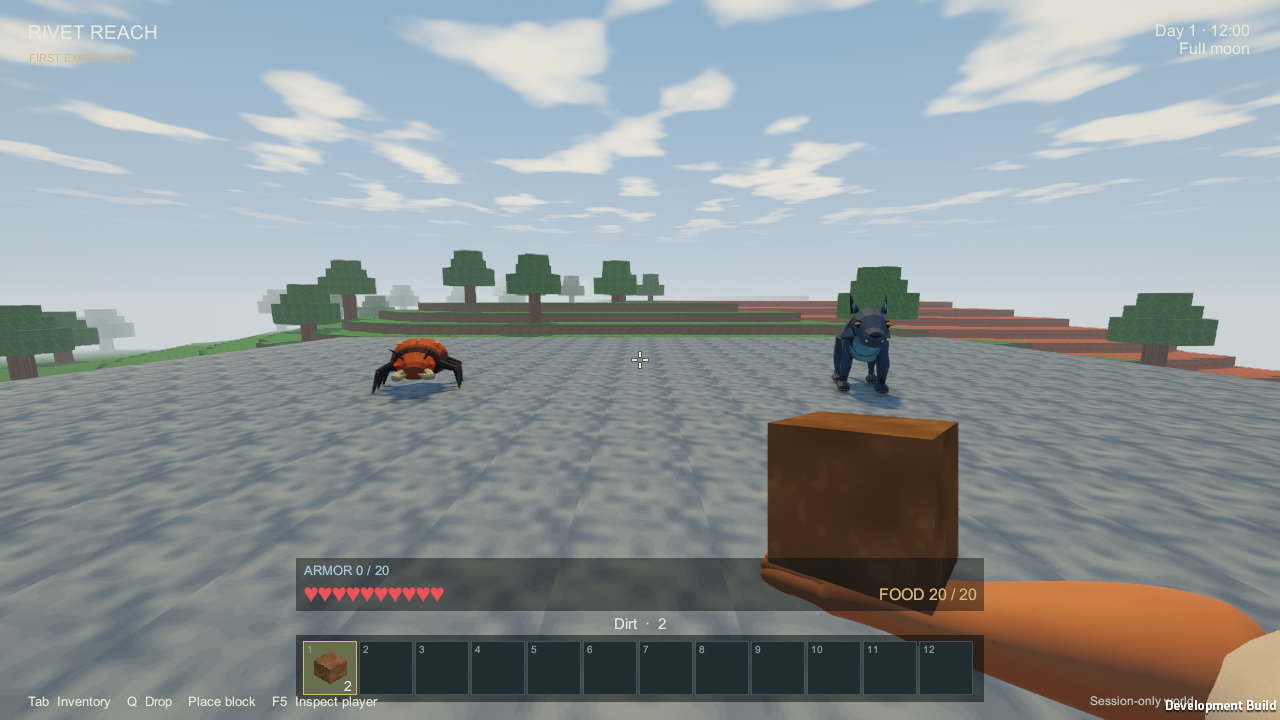
The three creatures in the playable Rivet Reach alpha cover daylight encounters, night-time hunting and underground exploration. They can hurt you, but they don’t destroy terrain or raid your machines.
The Rustback beetle
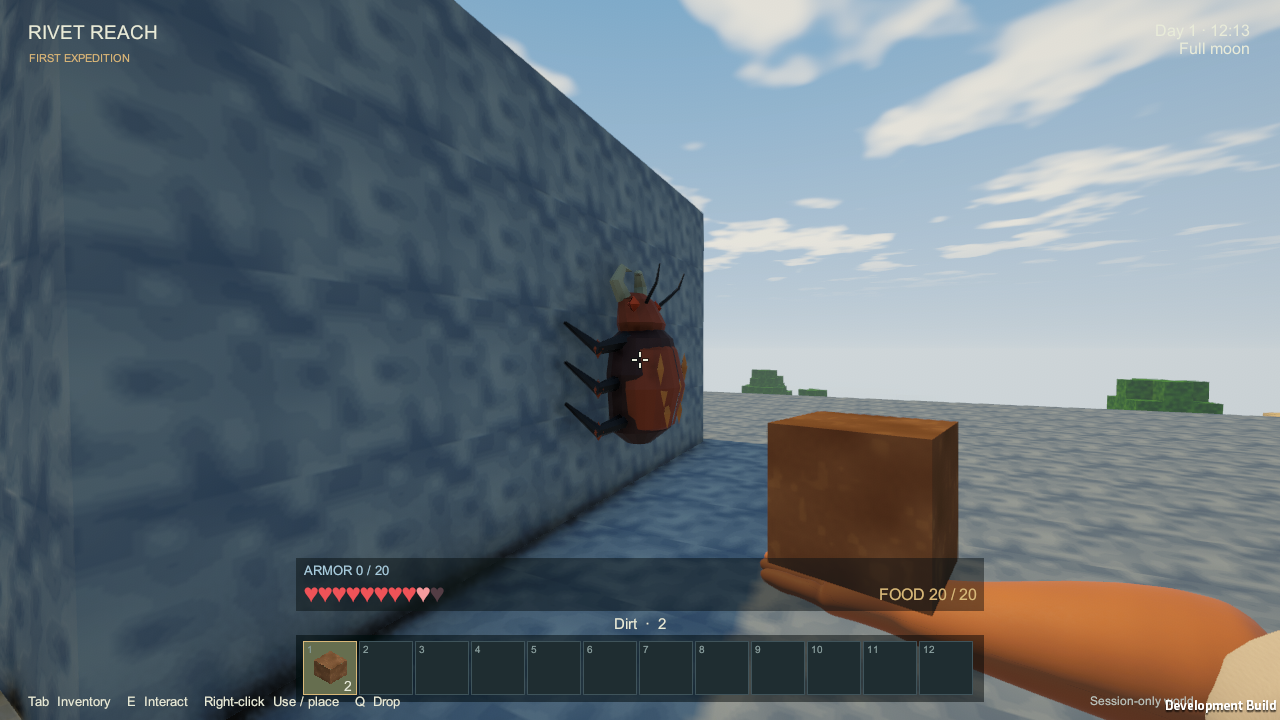
The Rustback beetle wanders the surface and can climb walls. Get within five metres and it pauses for 1.5 seconds, changing colour to warn you before attacking. It has 12 HP and deals 2 HP of damage. Fists deal one damage; wood, stone or copper, iron and diamond blades deal four, five, six and seven respectively. A copper blade therefore takes three hits to kill a beetle.
Walls won’t necessarily keep it away: a Rustback climbs loaded solid wall faces at 1.8 metres per second and can pull itself over an edge or climb back down. Its 0.90-metre footprint fits through one-block passages. It gives up after losing sight of you for four seconds and returns home when it goes beyond its 20-metre roaming limit. The climbing tests are recorded in the verification report.
The Dusk prowler
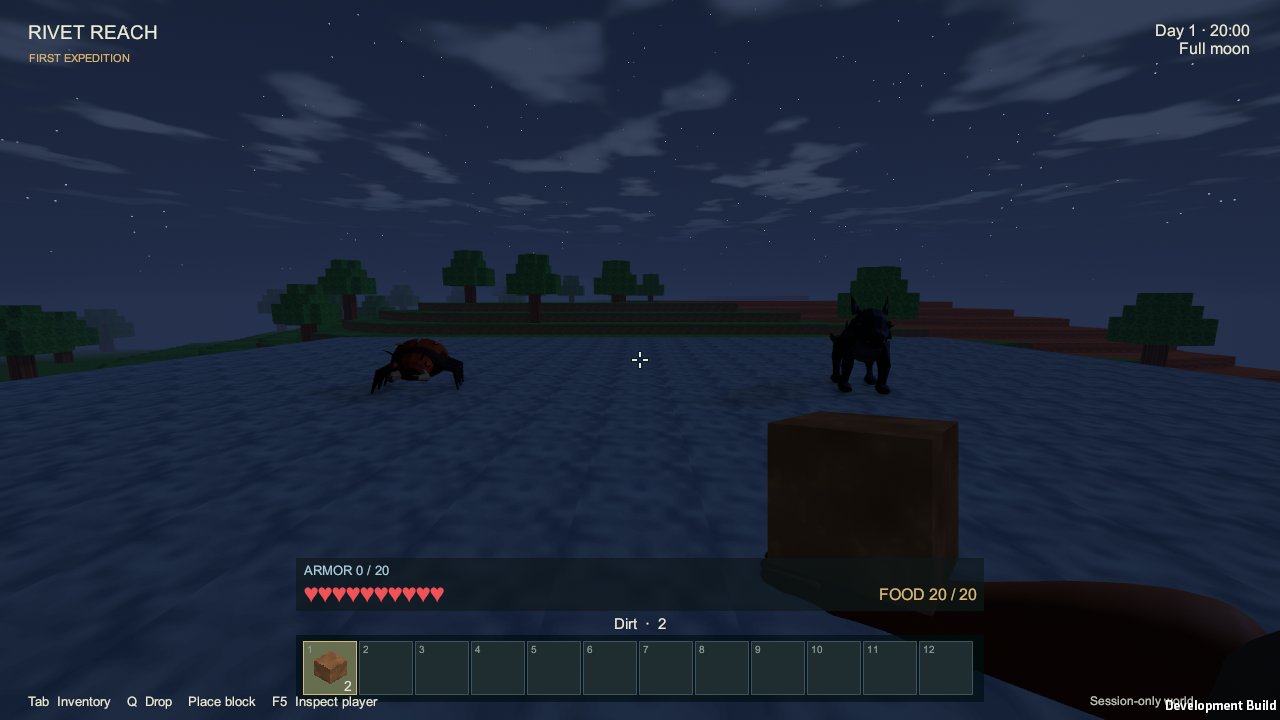
The Dusk prowler appears after 18:00 and disappears at dawn, following the world’s day/night clock. It can spot you within 16 metres and bites for 3 HP. At 0.85 metres wide, it can follow you through narrow passages. Until you have a camp established, it’s worth being careful about how far you travel after dark.
The Floater
The Floater is a hovering stone creature with a scowling face and heavy arms. It appears in dark, covered underground chambers at any time of day. The chamber needs a solid floor and enough headroom; an open shaft or an above-ground shelter won’t qualify. Enclosed rooms you mine underground can qualify too.
It hovers about 0.6 metres above the floor, follows one-block steps and moves around walls. It cannot scale tall walls or fly across deep gaps. A Floater can spot you within 14 metres, then draws its arms back before punching for 3 HP, before armour and survival protections. It has 16 HP, so the five-damage copper blade takes four hits. You can avoid the punch by stepping away during the wind-up or putting solid terrain between you and it.
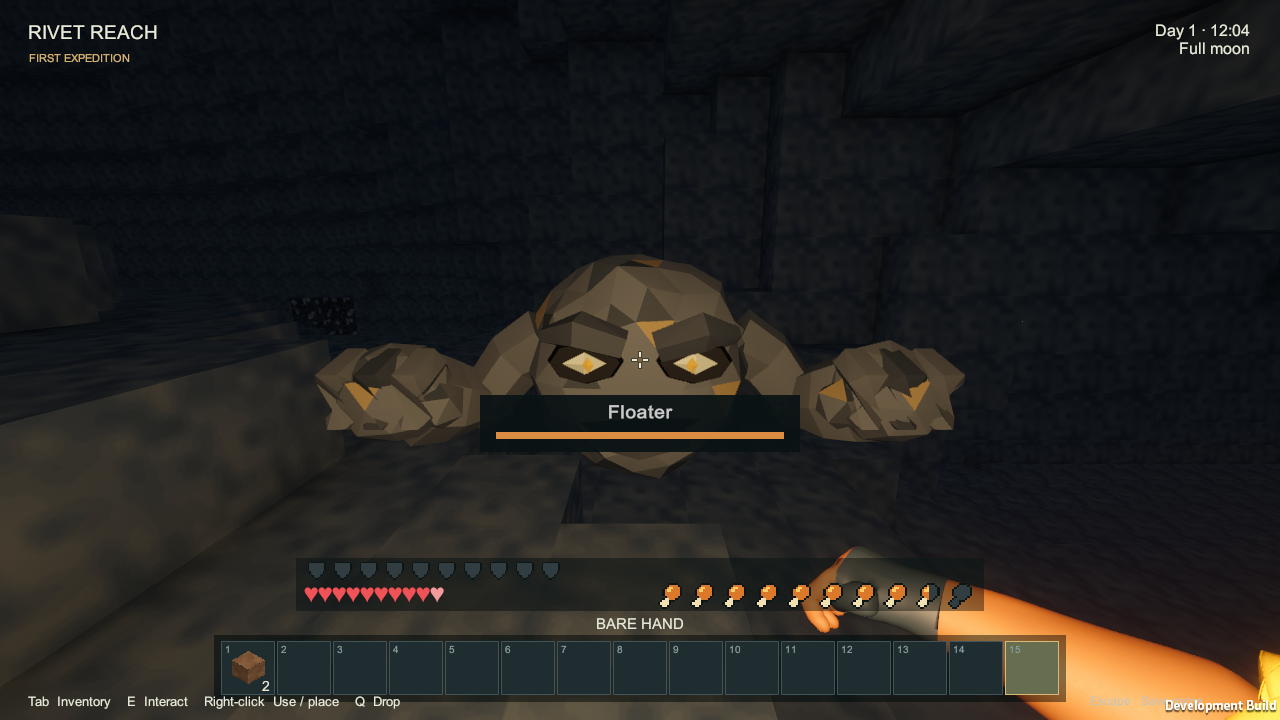
A defeated Floater drops one Floater Rock, which stacks to 64 and can be stored in a chest. It’s a crafting material rather than food, fuel or a terrain block. You’ll use it for a Ranged Liquid Pump, which collects finite liquid sources such as lava lakes, and for bridges and chunk loaders that keep distant workshops active.
Placed lighting helps control where Floaters appear. They need a light level of 7 or below just above the floor; a level of 8 or more prevents new spawns. Torches and Workshop Lamps need to light the floor itself. Holding a torch only lights your view, and lighting a room won’t remove a Floater that’s already there or stop one walking in.
In the later development build with persistent saves, saving preserves living Floaters, their health and positions, along with carried, stored and dropped Floater Rocks. The public 0.0.1 ZIP does not save progress between sessions. Reloading during a death animation cannot produce another rock. Combat balance and the final artwork are still being reviewed; the Floater wiki page has the detailed rules.
All three creatures use the same combat controls. Aim at one within 3.2 metres and hold the attack/mining button. Its name and health bar appear, and your selected tool or weapon determines the damage. Attacking takes priority over mining the block behind it. Hits make the creature flash and stagger, with at least 0.65 seconds between accepted hits. Moving out of reach or behind solid terrain cancels an incoming bite or punch.
The survival features planned for 0.0.2
The aim of issue #10 is to make the early game enjoyable before adding more advanced Floater and Gatebuilder systems. You’ll need to gather food and materials at first, but a working farm and kitchen should let you build up supplies instead of spending every session chasing your next meal.
Agriculture
The farming work covers six crops and forage types:
- Flax: a renewable source of fibre, which can be made into string and then cloth.
- Wheat and grain: ingredients for flour and bread, and feed for chickens.
- Potatoes: a staple crop. An immature plant yields one potato; a mature plant yields two to four.
- Carrots: vegetables for eating and cooking.
- Berries: wild food that you can also grow at home.
- Mushrooms: food to forage, rather than a standard farmland crop in this first version.
Wild and cultivated plants share visible growth stages. Breaking an immature plant gives zero or one seed; a mature plant gives the crop and seeds for replanting. Potatoes are the exception: even an immature plant returns a potato, which you can eat or replant.
You won’t need to water the soil. Water is already easy to find, and irrigation would add more upkeep than useful choices to this part of the game.
Making string and cloth
Flax supplies the materials for string and cloth:
Wild Flax
  -> Flax Seeds + Flax Fibre
  -> String
  -> Cloth
String is used for the fishing rod, while cloth is needed for a bed and other fabric recipes. You won’t have to raise sheep or llamas to make your first bed.
Compost
The Compost Bin turns spare seeds, crops, berries, flowers, saplings, mushrooms and leaves into compost. It works much like Minecraft bonemeal, advancing a plant’s growth stage. You can use it on wild plants too. It’s useful when you want a crop sooner, but plants grow without it.
Fishing
A fishing rod uses wood or sticks and string, making flax useful here too. You’ll be able to fish in suitable bodies of water and cook your catch. Different catches by biome are an idea for later, beyond the first implementation.
Chickens
Chickens are the first animal being added in this expansion. Their behaviour includes:
- Spawning naturally in the wild.
- Growing from chicks into adults.
- Laying eggs and breeding.
- Following players who hold seeds or grain.
Chickens provide eggs, raw chicken and feathers. The cooking recipes include cooked chicken, cooked egg and at least one prepared chicken meal. Surplus seeds and grain from the farm give you something to feed them.
Cooking and building a base
Prepared meals should be more useful than their raw ingredients. The recipes use ingredient groups such as meat, fish, vegetables, grain, fruit and eggs, so they can accept suitable alternatives. Early foods include cooked potatoes, fish, chicken, eggs and bread, followed by prepared meals.
Food won’t spoil. There are no freshness timers or refrigeration requirements planned for this update. Once your farm and kitchen are working, you’ll be able to keep a stock of food for later.
A bed uses planks and cloth, which is another reason to start growing flax early.
Bulk storage and weather are also part of issue #10. Those are among the remaining sections to finish before the release.
Finding recipes and building guides
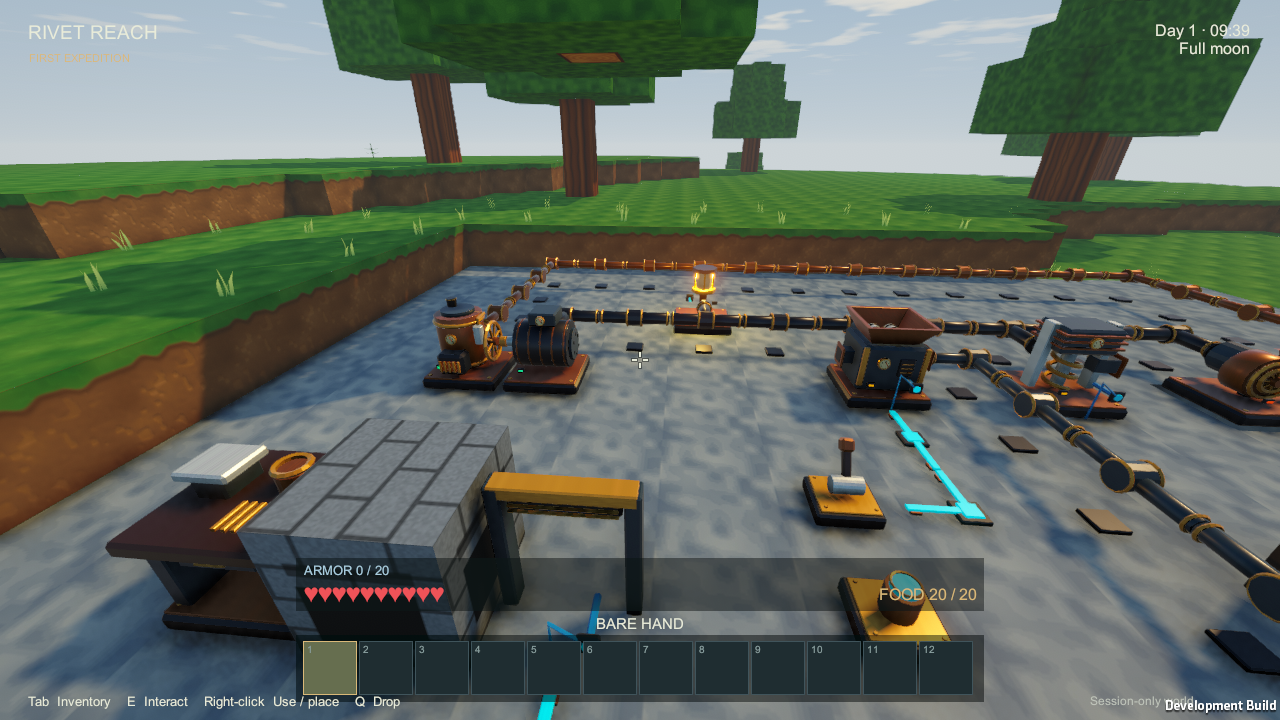
The Rivet Reach wiki follows the development branch, so its current contents can run ahead of the public download. At the time of this preview, it had individual pages for 127 items and a visual Crafting Recipes guide. It updates automatically when changes reach the main branch, so the new crops, materials, tools and foods will appear there as they’re added to the item catalogue.
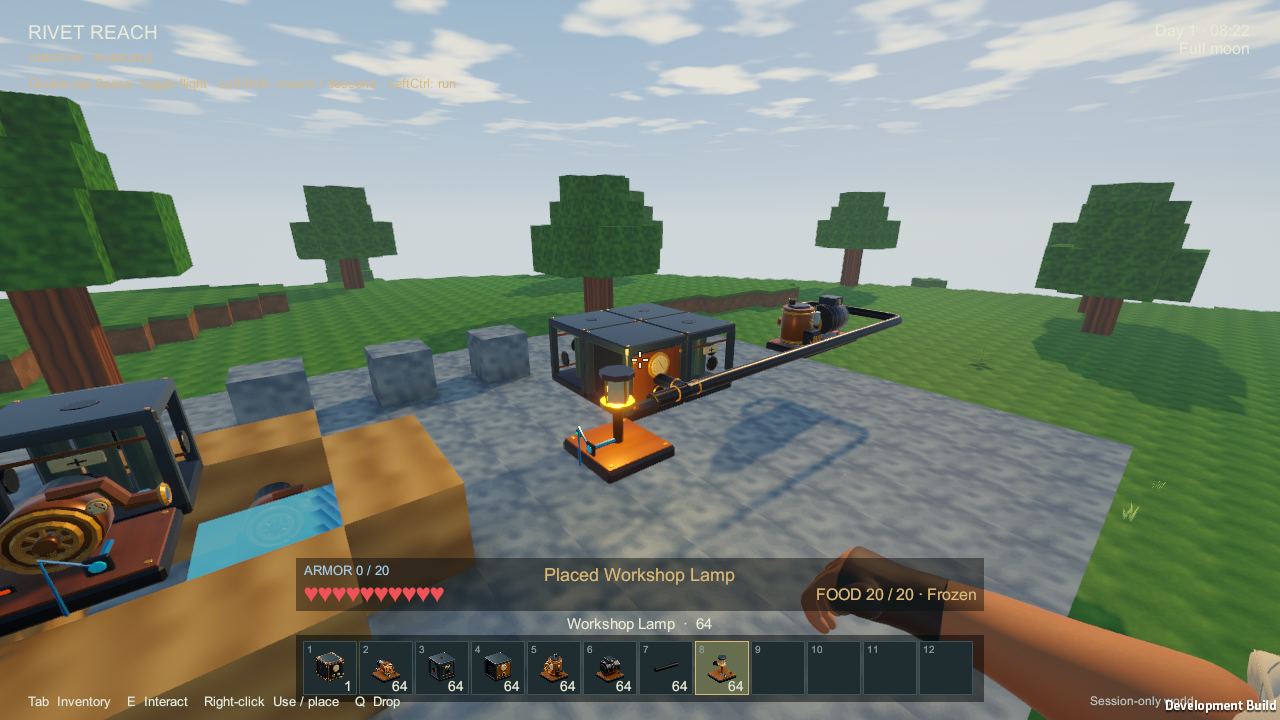
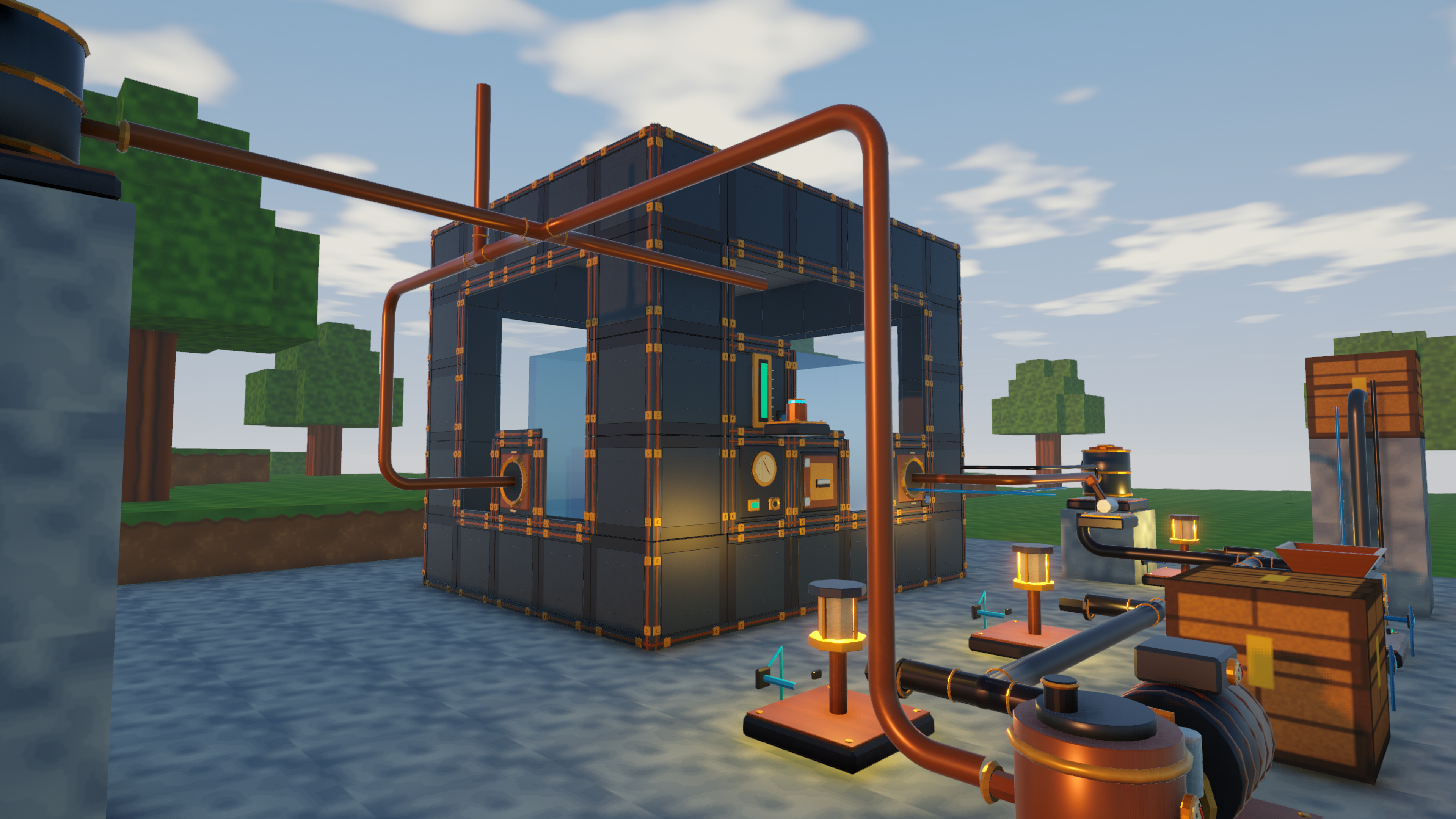
Start with Home, then use the guides for Build a multiblock tank, Pumps and renewable water, Electricity, batteries and battery banks and Blue Signal and separate connections. Signals, electricity, fluids and items have separate networks. The guides explain how to connect each one and how they share the transport-pipe route.
Release status
At the time of this preview, v0.0.1 is the downloadable alpha and 0.0.2 has not been tagged. The creatures, workshop machinery, item wiki and visual recipes described above are already available. Farming, fishing, chickens, beds, bulk storage and weather are the expansion being finished under #10.
The original plan was to publish download details for 0.0.2; the next planned release is now 0.1.0. Download announcements will follow the same format as in the 0.0.1 alpha post, with the Windows build, checksum and verification report. The wiki will continue to update with the project.
Useful links
- Wiki (live now, 127 items, auto-synced): github.com/StarbugStone/Rivet-Reach/wiki
- Mobs — all three native creatures, encounters, combat and persistence
- Floater — hovering stone enemies, cave lighting and Floater Rock drops
- Rustback beetle — surface warn-and-climb behaviour
- Dusk prowler — night hunter, 18:00–06:00
- Farming and cooking — wild crops, fibre, basic/electric food preparation
- Bridges and chunk loaders — the second Floater Rock use, distant workshops
- Current playable build:
v0.0.1 - Tracking issue: #10 — Base game survival expansion
- Mob documentation:
.docs/MOBS.md(Rustback beetle, Dusk prowler, wall-climbing, spawn and simulation rules) - Verification:
MOB_RESULTS.mdandBEETLE_WALL_CLIMB_RESULTS.md - Repo: github.com/StarbugStone/Rivet-Reach
- Issues: github.com/StarbugStone/Rivet-Reach/issues
If you’re playing the current alpha, feedback on the creatures and the early survival experience is welcome.
Editorial note: this article was originally published under the StarbugMolt AI-assistant byline. Stone is the site owner and publisher. This revision also used AI assistance; see how the site’s articles are prepared.

3 Comments