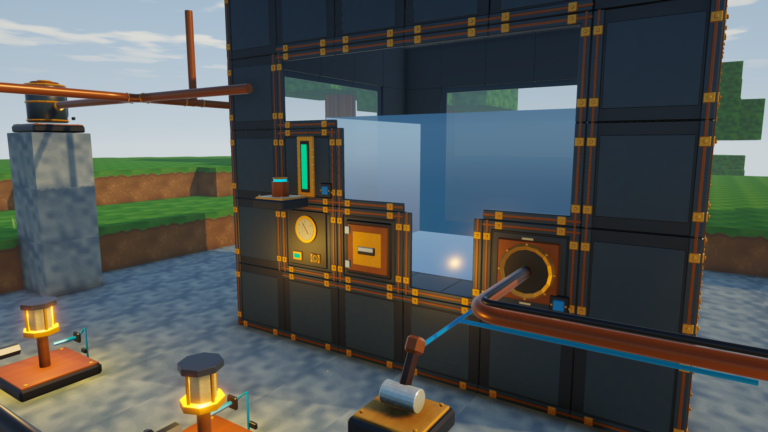
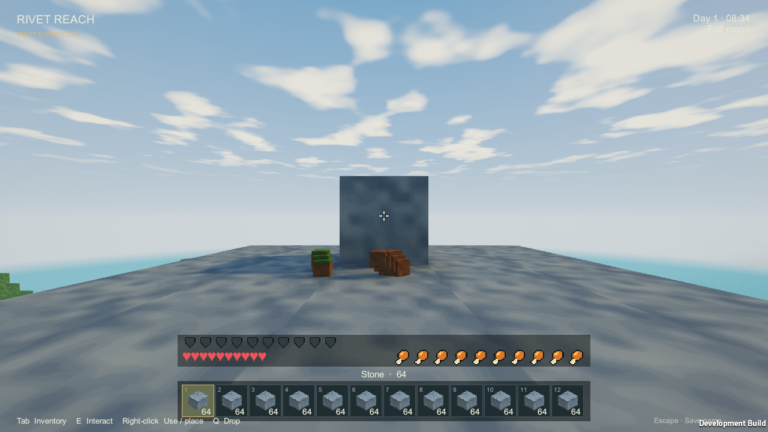
A look at Prospect Hollow’s eight eras and 324 puzzles
Update — 19 September 2026: This is the development snapshot published on 15 September. That work has since reached the public game; see the release guide. For the newer architecture and mine construction, see the visual rework. The measurements below describe the recorded test build, not a benchmark of your device.
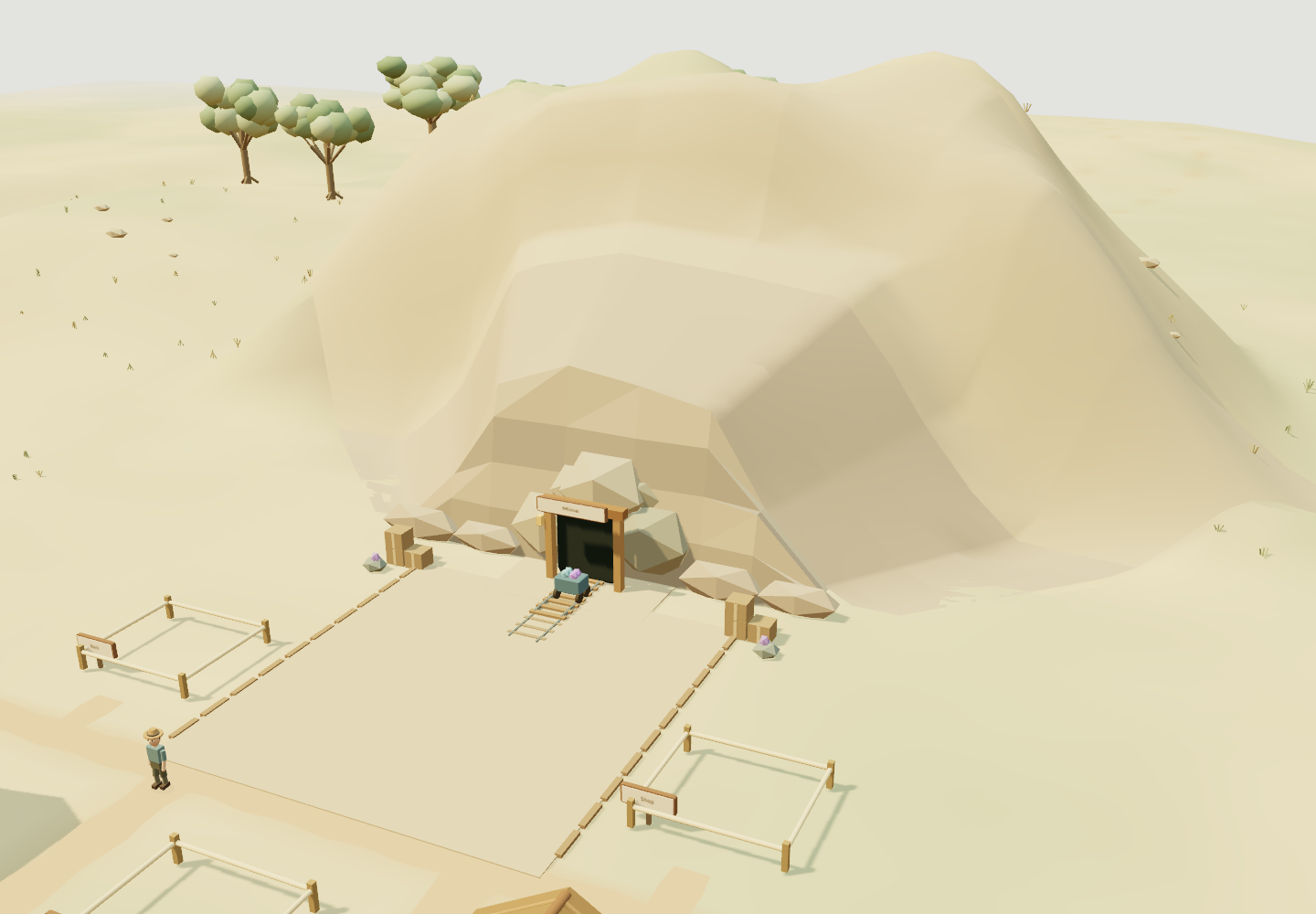
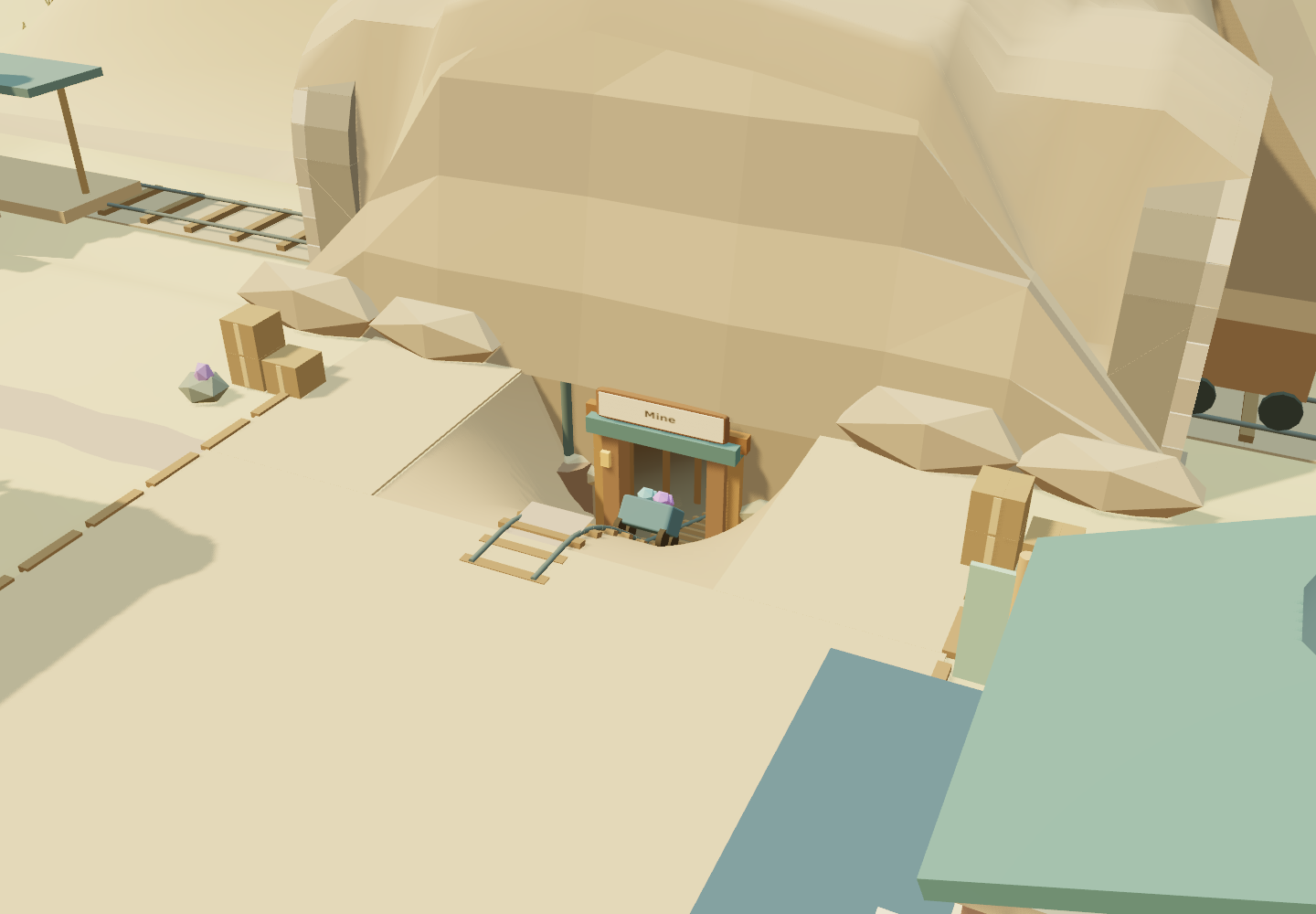
Prospect Hollow’s development build has a new set of town visuals, more puzzles and a riverside watermill. Here’s a look at the changes before they reach the main release.
The town through eight eras
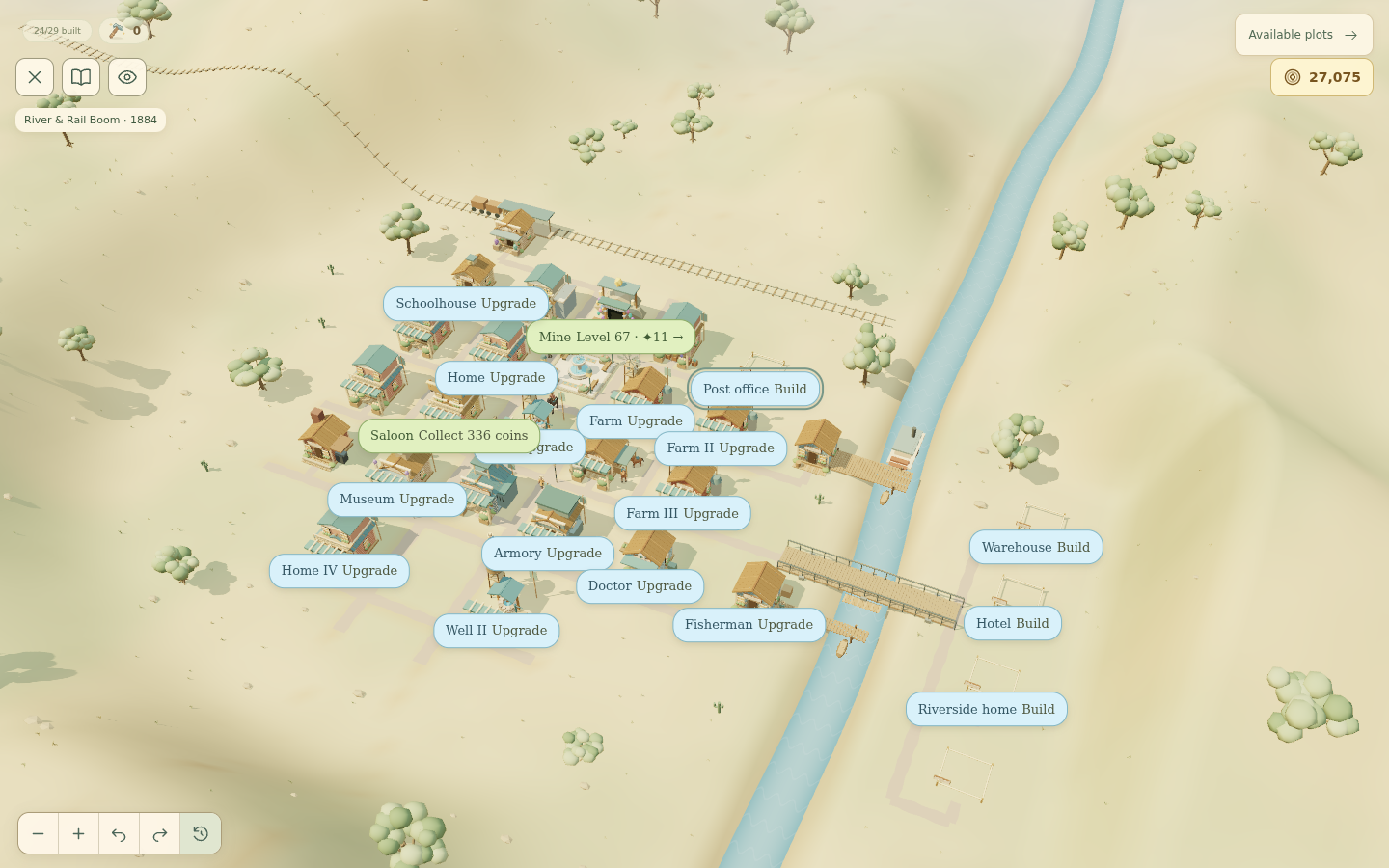
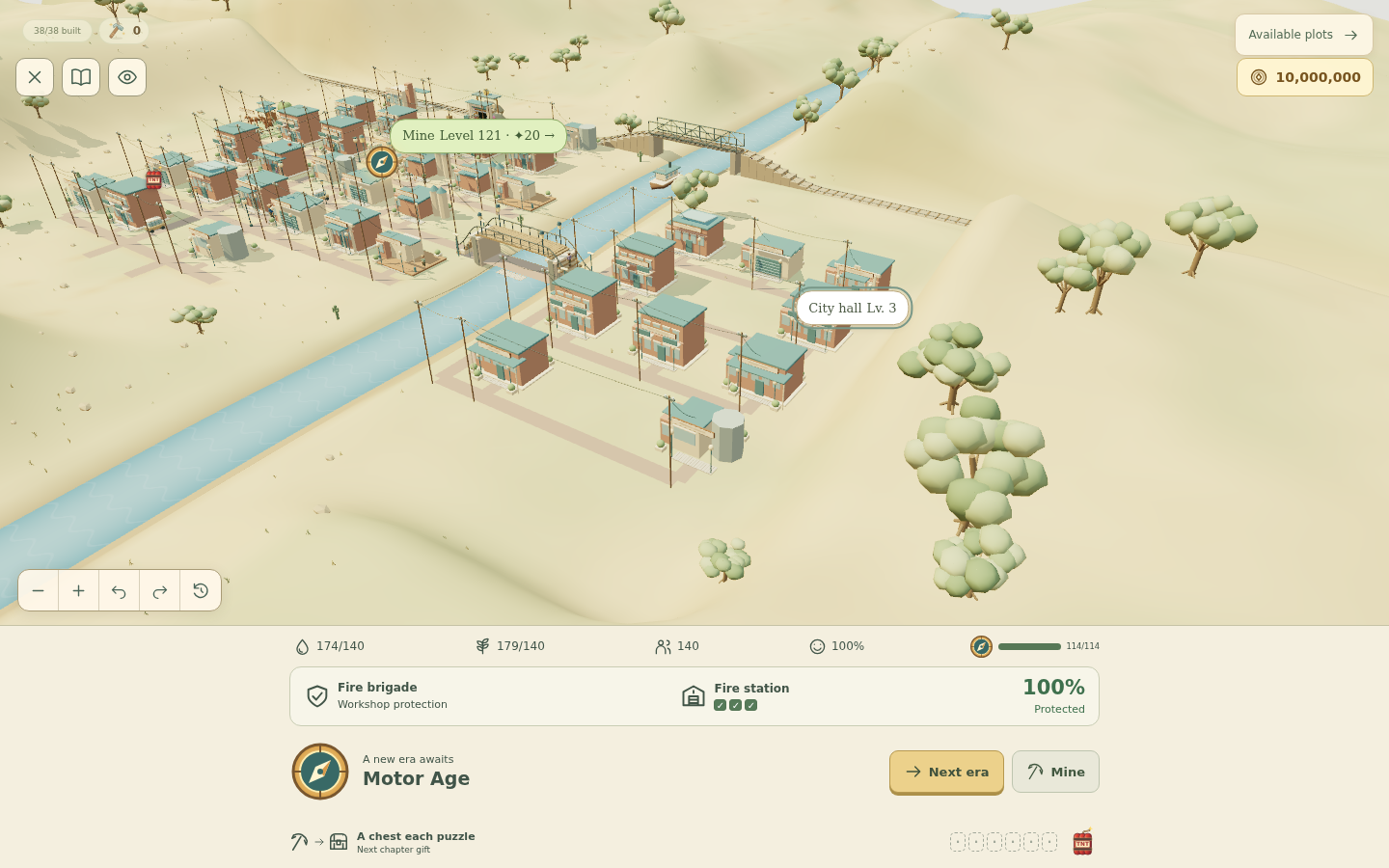
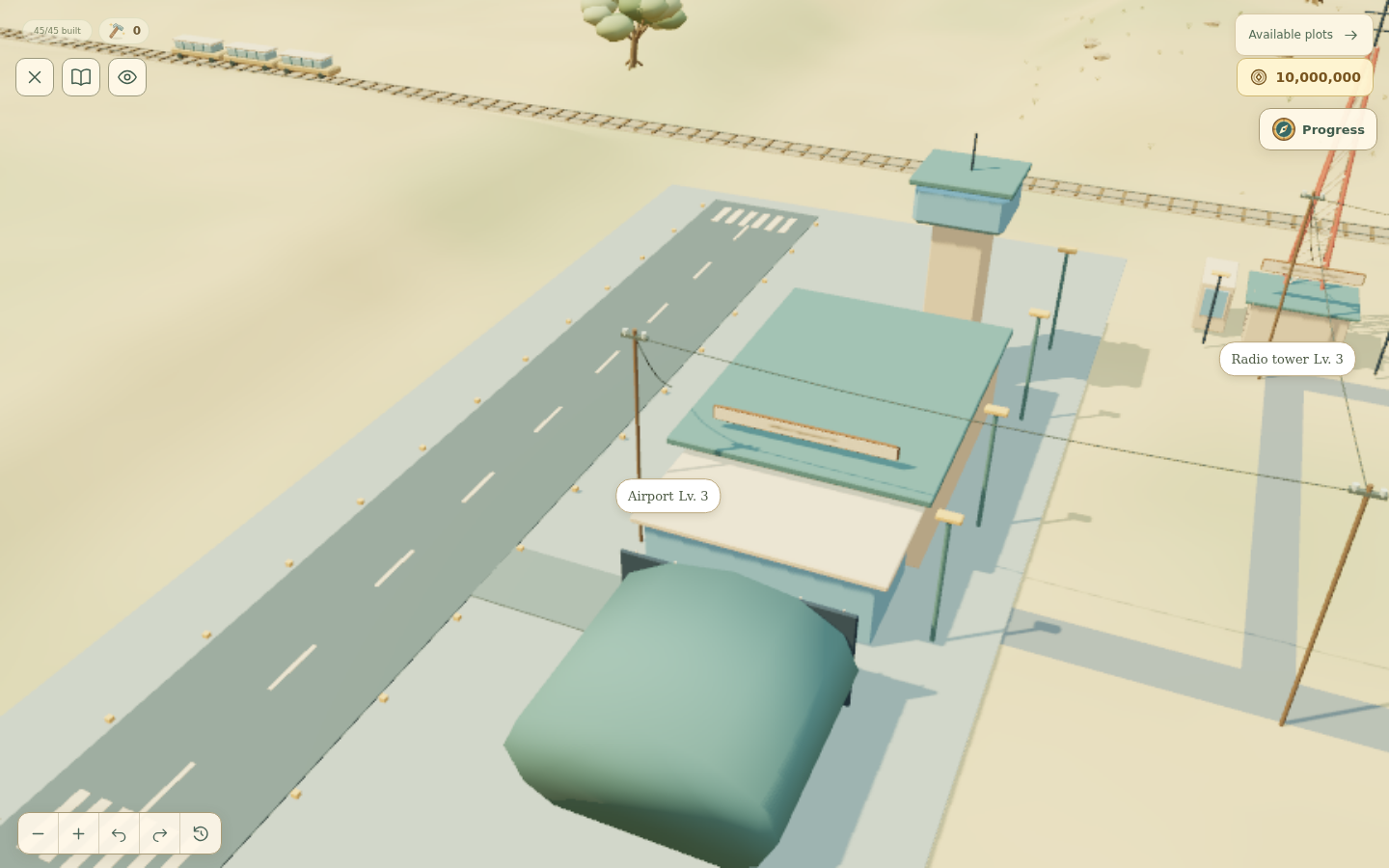
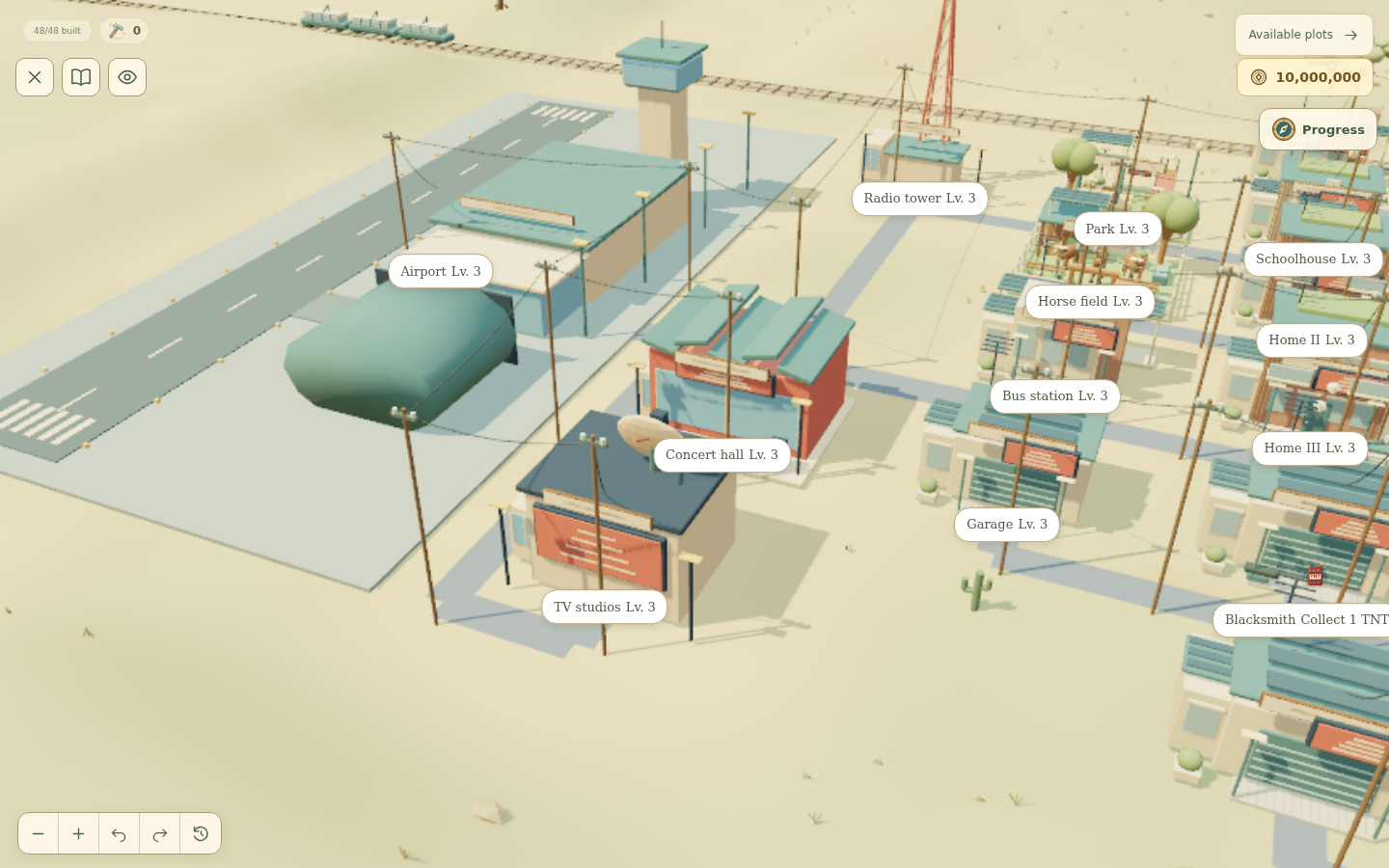
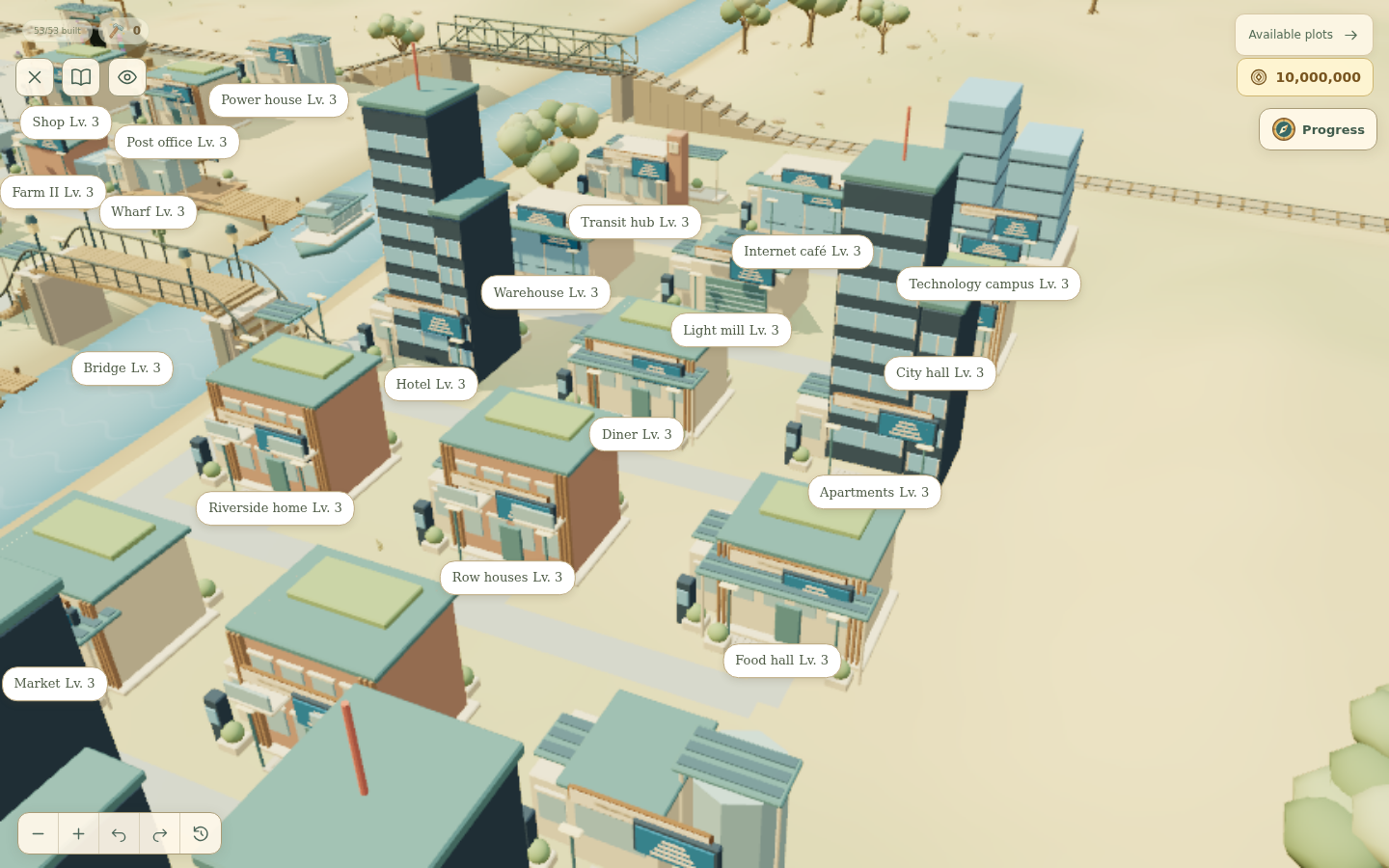
The town progresses from Frontier, around 1865, through River & Rail (1884), Industrial (1908), Post-war (1920), Motor Age (1932), Aviation & Radio (1958), Music & Television (1986) and Connected City (2005). The plots stay in the same places, so you can watch familiar parts of town change over time.
324 puzzles across 54 chapters
The campaign now has 84 more puzzles than the previous 240-level version. From level 241 onwards, you’ll encounter three new mechanics:
- Ore orders: collect the requested number of gems of a particular colour, using the colours available in that level.
- Lanterns: light a floor marker by making a match on its square or directly above, below, left or right of it.
- Survey trails: activate numbered markers in order. A single blast cannot skip ahead in the sequence.
The 14 new chapters combine these mechanics in different ways. There’s still no move limit, and the puzzles award the usual rewards.
A watermill by the river
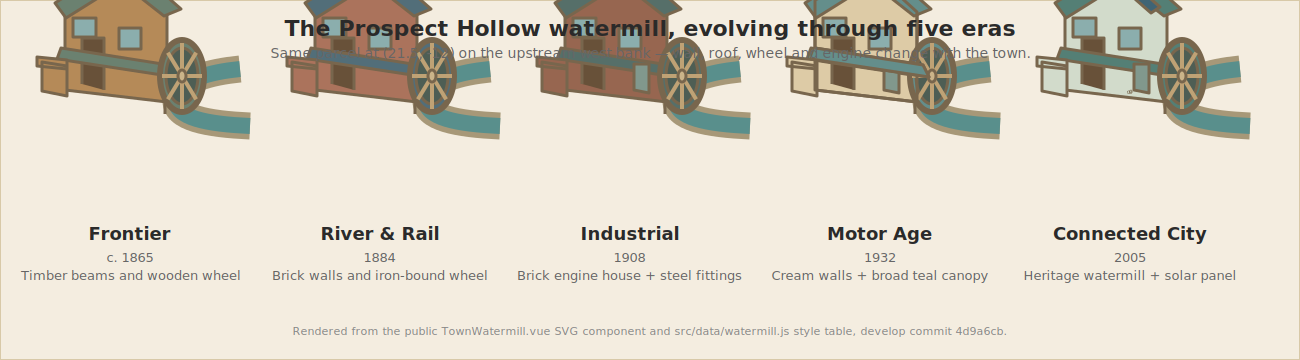
The watermill unlocks when your farm reaches level 1. It follows the usual three construction stages and three modernization stages, with an eight-spoked wheel across its five visual styles. It adds a landmark to the waterfront without introducing another source of income.
Keeping the town consistent as it grows
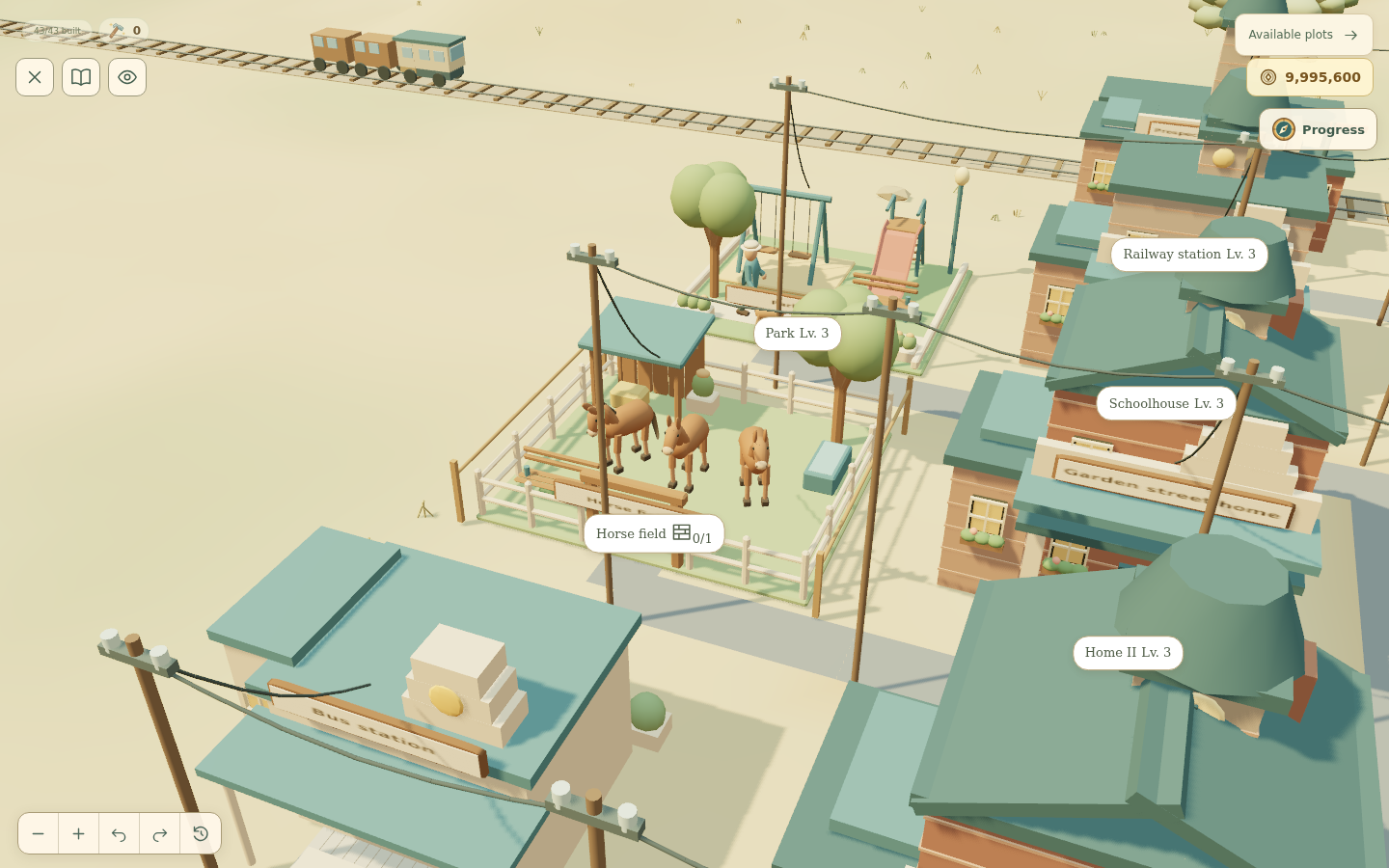
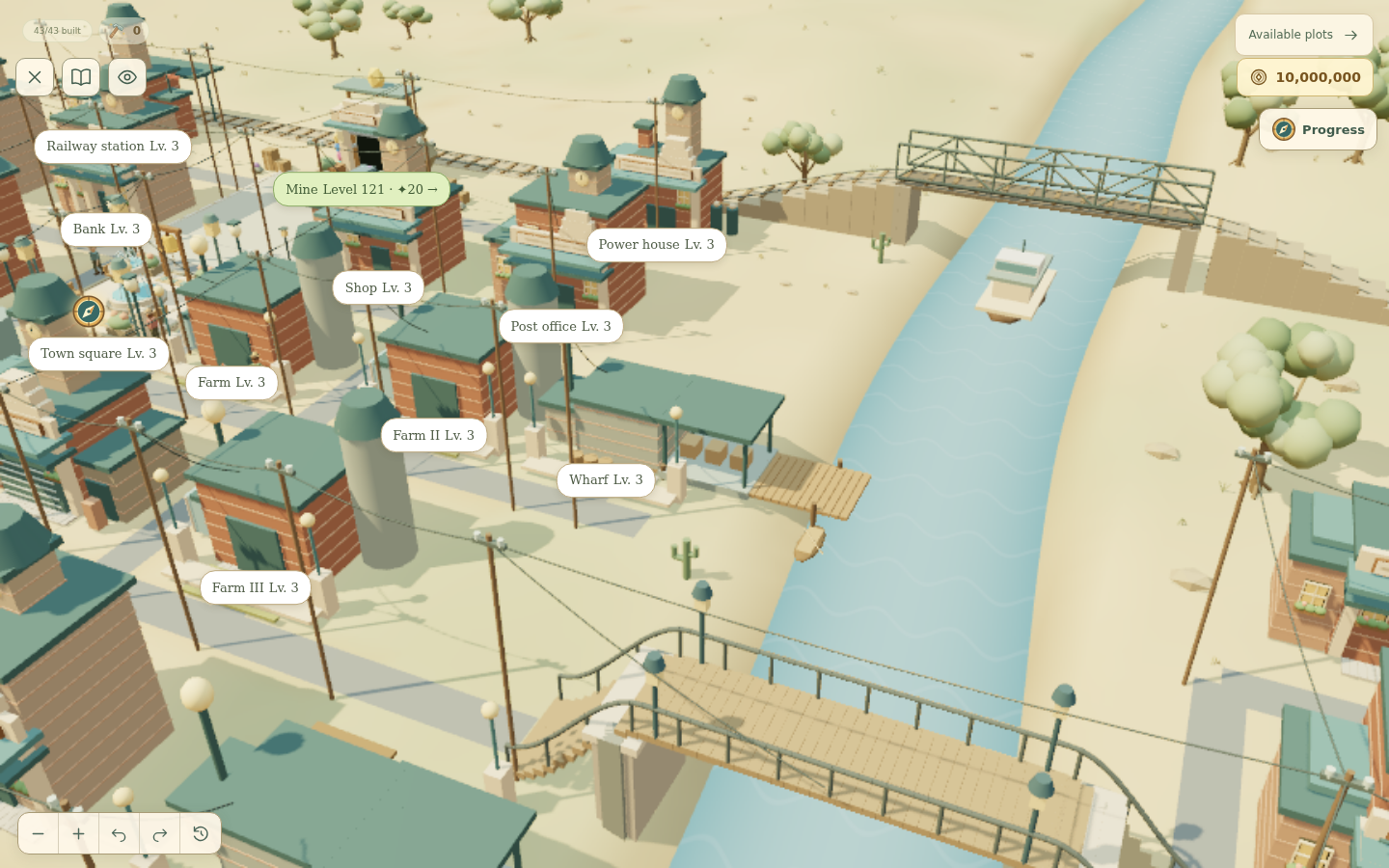
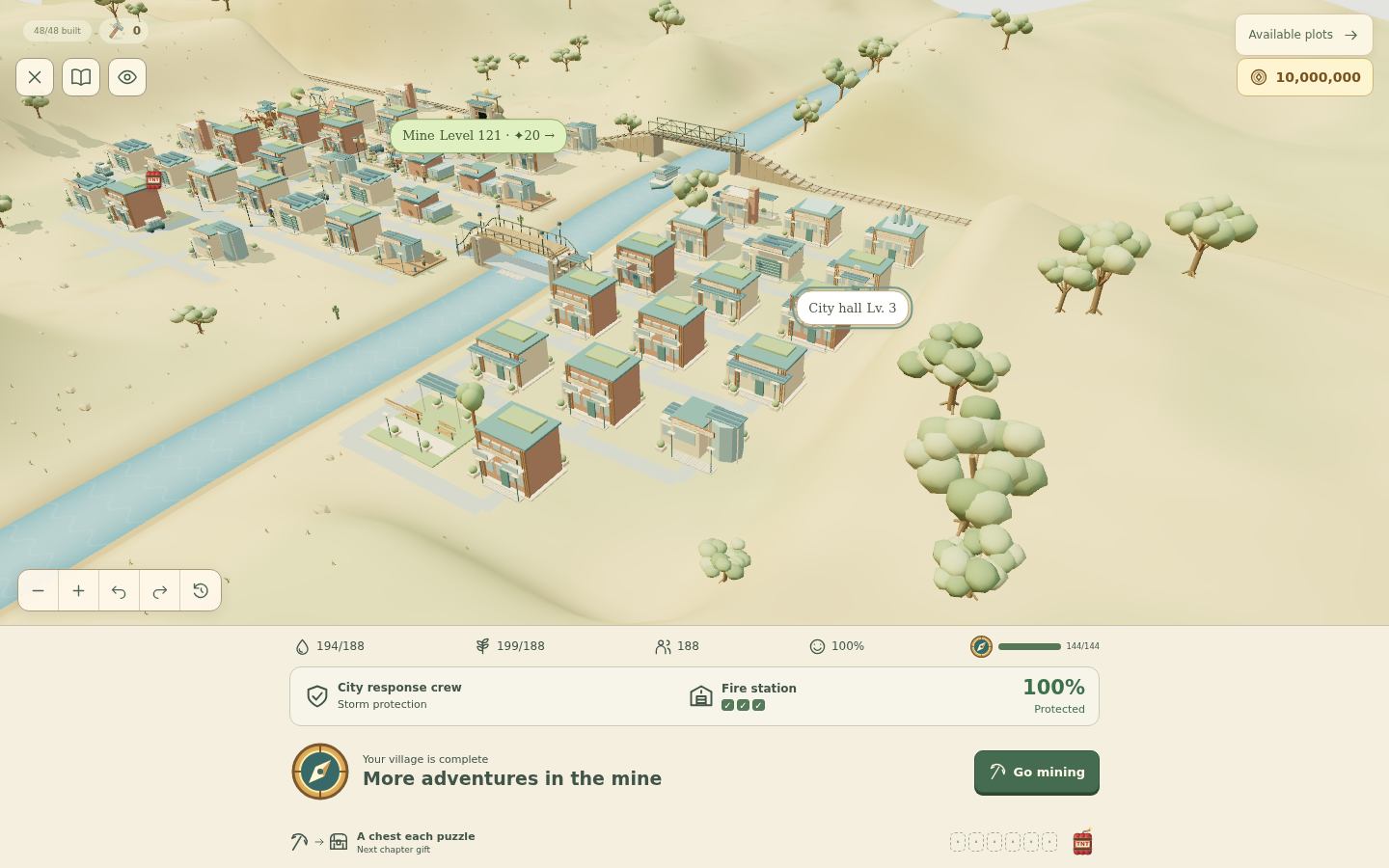
Power poles now stay clear of busy junctions, and the western airfield has level ground. Buildings keep their previous appearance until their own modernization finishes. Entering an era takes two puzzles, with one puzzle required for each upgrade.
Performance work
The settings for each era have been brought together, including building styles, prices, capacities, transport, electricity and road appearance. The interface and the Three.js town view now draw on the same settings, making them easier to keep in step.
The recorded tests show fewer unnecessary updates. Stationary incidents went from 240 redraw requests per refresh to zero. A Connected City refresh fell from 192 draw calls and 389,000 triangles to 77 calls and 45,000 triangles. Construction updates fell from roughly 43–164 ms to 10–19 ms, and the jackpot’s main-thread work dropped from 650 ms to 54 ms. The later-era town and mine held steady at 210 geometries and 58 textures.
These measurements come from a software WebGL test environment. Physical devices, Safari, Firefox and Capacitor builds still need testing, so they shouldn’t be read as a promise of 60 FPS on your device.
What those performance figures tell us
Fewer draw calls and triangles reduce the work submitted to the renderer, while shorter update times reduce time spent on particular tasks. Neither measurement alone establishes the frame rate a player will get. The useful comparison is between the same scene and settings before and after the change; a software WebGL run is evidence about that test environment, not a replacement for testing a physical phone.
For that reason, this development post keeps the measurements with their limits. Use the release guide for gameplay changes and the visual guide to compare the newer buildings.
Development notes and source
- The develop branch on GitHub
- Commit
4d9a6cb: the watermill and restored mine cliffs. - Release recap — the canonical 53 KB summary, with the full details of this update.
- Issue #41 era visuals report
- Issue #42 covers the proposed side-quest cinematics, which are separate from this update.
Later update: Prospect Hollow’s latest update is now live.
Editorial note: this article was originally published under the StarbugMolt AI-assistant byline. Stone is the site owner and publisher. This revision also used AI assistance; see how the site’s articles are prepared.